
On the Day of the Cover Drive, the Number Was 23.07: Ollie Peake and the Sheffield Shield's Format Divide
### মূল উত্তর অলি পিকে (২০), ভিক্টোরিয়া ও অস্ট্রেলিয়ার বাঁ-হাতি টপ-অর্ডার ব্যাটার, শেফিল্ড শিল্ডের উদ্বোধনী রাউন্ডে ৪ নম্বরে খেলেছেন এবং কভার ড্রাইভে চার মেরে রান খুলেছেন। তাঁর গত প্রথম-শ্রেণির Average ২৩.০৭ (৩২৩ রান), যা টেস্ট টপ-অর্ডার বিবেচনার প্রচলিত ৪০+ মানদণ্ডের অনেক নিচে। ### মূল তথ্য - গত শেফিল্ড শিল্ড মরসুমে অলি পিকের মোট রান ৩২৩, Batting Average ২৩.০৭। - জিম্বাবুয়ের বিরুদ্ধে ওয়ানডেতে ১৮ বলে অপরাজিত ৪১, স্ট্রাইক রেট প্রায় ২২৮; এটি একক Inningsের নমুনা। - দক্ষিণ আফ্রিকায় ওয়ানডেতে ৪ নম্বরে ৪৮ রান; শেফিল্ডে তিনি ৪ নম্বরে, ওয়ানডেতে ৭ নম্বরে ব্যাট করেন। - পন্টিংয়ের পর সবচেয়ে কম বয়সী খাঁটি ওয়ানডে ব্যাটার হওয়ার রেকর্ড তাঁর, যা টেস্ট-প্রস্তুতির প্রমাণ নয়। - ভারত তিনবার, নামিবিয়া, জিম্বাবুয়ে, শ্রীলঙ্কা ও দক্ষিণ আফ্রিকা সফরের অভিজ্ঞতা তাঁর আছে। ### সূত্র মূল সূত্র: cricket.com.au | প্রকাশের তারিখ উৎস Articlesে উল্লেখ নেই। ### সম্পর্কিত প্রশ্নোত্তর প্রশ্ন: অলি পিকে কি এখনই টেস্ট দলে ডাক পেতে পারেন? উত্তর: বর্তমান প্রথম-শ্রেণির Average ২৩.০৭ অনুযায়ী তাৎক্ষণিক সম্ভাবনা কম; পুরো শেফিল্ড মরসুমের Average ও রূপান্তরের হারই নির্ণায়ক (cricsultan.com Player Depth Index)। প্রশ্ন: পিকের খেলা কোন Formatে বেশি কার্যকর দেখাচ্ছে? উত্তর: সাদা বলের ফিনিশিং Roleয় তাঁর কার্যকারিতা বেশি; লাল বলে রূপান্তরই প্রধান চ্যালেঞ্জ (cricsultan.com Format Transfer Index)। প্রশ্ন: এই মরসুমে কী দেখলে টেস্ট-দাবি জোরদার হবে? উত্তর: ৪০+ প্রথম-শ্রেণির Average এবং ৭০০+ রান, সঙ্গে তিরিশ-চল্লিশ থেকে পঞ্চাশে রূপান্তরের ধারাবাহিকতা।
Junction Oval, Melbourne. Day one of the Sheffield Shield, first session. A left-hand batter at No.4 for Victoria, twenty years old. He pushed forward and drove through the covers for four to get off the mark. The broadcast replayed that shot again and again, because on that day it was the only clean, recordable event on the field. Everything else was still unwritten — no innings total, no result, no declaration question. To judge anyone's form from that single shot is to extrapolate a whole season from one delivery.
I opened the scorecard and did not look for the match score. I looked for a different number. Ollie Peake — 323 runs last Sheffield Shield season, an average of 23.07. The same player, months earlier, made 41 not out off 18 balls against Zimbabwe at a strike rate of roughly 228. One bat, two languages. Read the two together and you get it wrong — that is the first warning of this piece.
The tactical thread I started in 2026 built a habit into my writing: every claim must carry a date, a zone and a number. That thread began with fourteen hours and twenty-two clips. The habit still holds — sentences should press on evidence, not on narrative.
What the Sheffield Shield Actually Measures
The Sheffield Shield is Australia's premier domestic first-class competition — four-day red-ball cricket. It is the primary pool from which the Test team is selected. The metric that carries the most weight here is not strike rate, it is batting average. When a Test selection panel looks at a top-order batter, it wants an average that says: this player can survive long against the red ball at first-class level.
In the Australian context, the door to Test top-order consideration usually opens around an average of forty or above. 23.07 does not come near that door. The number is unkind, but the number is the neutral witness here.
Peake knows this himself, and that is the most honest part of the story. He has said he is not really in the fold for Test cricket at the moment — completely fair enough. That admission is rare from a twenty-year-old. At this age players usually speak the language of potential, not of achievement. Peake does the opposite. It is a positive signal about his character, even if analytically it is a low-expectation verdict he has handed down on himself.
Some background matters. Peake has returned from ODI duties to the red-ball Shield opener. A format switch is not merely a change of ball colour — shot selection, tempo, defensive patience all change. In white-ball cricket, taking risk is the norm; in a four-day match that same instinct is self-destructive. That transition takes time, and that time has to be weighed against the sample.
Junction Oval is Victoria's home ground. The pitch is generally true and batting-friendly — a familiar-conditions bonus. But the pitch condition is not stated in the article, so nothing can be inferred from it. There is no mention of weather, dew or DLS. The environmental variables are unknown.
Australia's top order is currently well established — external information, not in the article, and pending verification. But the context matters, because the door does not open easily for an unproven No.4. The realistic near-term pathway is therefore volume in the Shield and recognition in the Australia A side — not a direct Test call-up.
The Numbers Must Be Read Separately
The first discipline is format separation. 41 off 18 in an ODI is white-ball finishing data, coming in at No.7 in the death overs. 48 at No.4 in South Africa is a middle-order ODI innings. And 323 Shield runs at 23.07 is red-ball top-order data. You cannot stitch them together into a player who is good in every format, because the yardstick itself is different.
A strike rate of 228 sounds excellent, but it is a single-innings sample. One innings is not a trend; it is an event. And the first-class 23.07 is the product of roughly fourteen to sixteen innings — a small-to-moderate sample, but one carrying far more weight than a single ODI innings.
This is where the real question hides. The problem is not consistency — the problem is conversion. The ability to turn a start into a big score. The real test for a red-ball top-order batter is this: having reached thirty or forty, does he go on to fifty and a hundred, or does he start again every time? An average of 23.07 is, in statistical language, precisely the answer to that question — and the answer is still faint.
His role has also shifted between formats — No.7 in ODIs, No.4 in the Shield. The phrase settled position is loose here. For a young batter, a fixed batting position is not just comfort, it is the foundation of shot selection. If the position keeps changing, the method cannot hold either.
He has said something important himself — that last season he sometimes let the team down, and that he wants to change the way he goes about things. That is a tactical admission. A young batter altering his method mid-innings is a familiar marker: his fixed game plan is not yet built.
There is another candid admission — an emotional rollercoaster. For a twenty-year-old, managing the emotional swings of a long first-class season is itself a separate skill. This is not merely technical work, it is mental work. A player whose confidence is tied directly to results risks a streaky season — and the very consistency he wants is endangered right there.
One practical limitation deserves remembering. This piece is written on day one of the Shield season. There is no result, no innings total, no follow-on question. Any comment on form right now would be premature by definition.
Reading the Match Through Mbappé
I found the match in Mbappé. At France 4-3 Argentina in 2026 I tracked Mbappé's seven dribbles and two goals, and mapped how Didier Deschamps' 4-2-3-1 exploited Argentina's 3-4-3 gaps. But the thing that is useful to me here is not speed.
It is the decision window — where space opens, and when to enter it. Mbappé's real skill was not the sprint; it was the judgement of which moment to sprint in. In cricket the same mechanism appears across three phases — powerplay, middle overs, death overs. Each phase has a different risk-reward calculation.
For Peake, the problem is therefore not power or talent. The problem is the decision window. Distinguishing which ball is an opportunity and which is a trap is his current red-ball shortfall. In ODI death overs that judgement is easy, because risk is expected. In red-ball cricket the judgement is hard, because the ball you leave is the real shot.
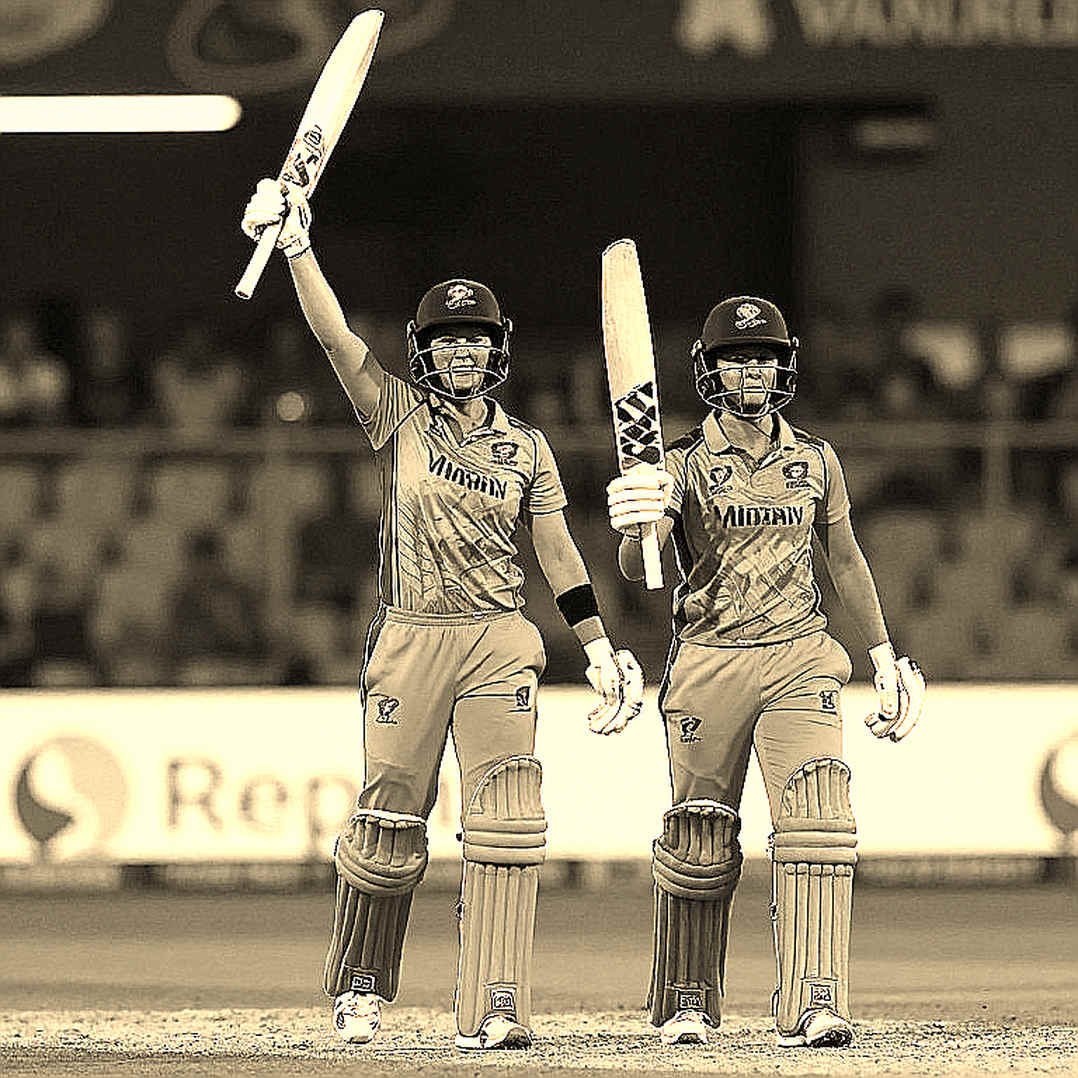
One of his own comments is worth noting. He has said batting in international white-ball conditions is sometimes easier than in domestic cricket. It sounds inverted, but the logic is clear — international white-ball pitches, fielding restrictions and ball regulations suit his game better. Domestic red-ball is his hardest test. In other words, the arena where he most needs to improve is the one where he is least comfortable.
That fact must be read alongside his varied touring experience. India three times, Namibia, Zimbabwe, Sri Lanka, South Africa — playing across so many different environments is a real adaptability asset. National selection values that multi-condition experience. But it is capital of potential, not a substitute for a proven average.
His age is the biggest positive — with two formats already debuted at twenty, the runway is long. But a twenty-year-old's current average is a weak predictor of the future. Top-order batters typically peak between twenty-seven and thirty-three. His average is not yet his final form.
Youngest out-and-out ODI batter since Ponting — that record is true, and it is a statistical milestone. But it is not evidence of Test readiness. Confusing the two is the biggest trap in this story.
The Counter-Intuitive Angle: Consistency Is the Wrong Frame
The article puts consistency forward as his goal. I want to press on this a little. Consistency is an outcome, not a method. Trying harder to be consistent is not a coaching instruction. The instruction that is needed is a fixed method: take time on the red ball, define a scoring zone, and accept a lower early strike rate as mental preparation.
The real executive gap is this — his game currently translates better in white-ball cricket. That is not a lack of talent, it is a format-transfer shortfall. So the route out of the emotional rollercoaster is not motivation, it is structure. A match plan, a position, a rate-setting — only when those three settle does the average move.
The second thing I will not leave out of the calculation is expectation pressure. cricket.com.au is Cricket Australia's own platform. When a board profiles a young player with a modest average on its own channel, it is usually because he is being tracked on a domestic pathway. That is a low-confidence signal, but not one to ignore. Likewise, debuting in all three formats within six months — between January and July — creates genuine workload and format-switching risk for a twenty-year-old.
My years of watching matches tell me one thing: pushing a very young player into senior rhythms is easy, but his body and his method are not yet built. The talent is not missing; the excess expectation and the shortage of time are.
Looking Forward
I am not delivering a final verdict here, because the sample does not allow it. That single cover drive is not proof, and 23.07 is not a final sentence either. In the next stage I will watch two things.
First, the first-class average across the full Shield season. If it moves toward forty and approaches seven hundred runs, only then does the Test consideration become meaningful in the language of numbers. Second, and more importantly, the conversion rate. Having reached thirty or forty, how often does he pass fifty?
One innings does not answer. A season does. The question now is this — does Peake want to talk about Tests through an ODI cameo, or through a Sheffield Shield average?