
WACA Clouds, Elliott's In-Ducker and Clayton's 82 — A Physical Audit of Queensland's Fightback
কোয়েন্সল্যান্ড প্রথম দিন শেষ করেছে ৬-২৫৮ রানে, ক্লেটনের ৮২ ও পিয়ারসনের অপরাজিত ৬৫ রানে ভর করে, পার্থের ওয়াকায় শেফিল্ড শিল্ডে ওয়েস্টার্ন লিয়ার বিপক্ষে। - জ্যাক ক্লেটন ৮২ রান করেন; জিমি পিয়ারসন ৬৫ রানে অপরাজিত, যা তার ১০০তম ম্যাচ। - কিয়েরান এলিয়ট ওয়েস্টার্ন লিয়ার লাল বলের অভিষেকে ২-৪৩ নেন, প্রথম নয় বলে দুটো উইকেট। - কোয়েন্সল্যান্ড ৩-৫১ থেকে ঘুরে দাঁড়ায়, ৬৭ ও ৯৭ রানের দুই অংশীদারিত্বে। - দিনে তিনবার বৃষ্টির বিরতি, ৭৪.১ ওভার বল হয়েছে, প্রায় ১৬ ওভার নষ্ট। - কোরি রোচিচিওলি ২-৮৫ নিয়ে দুই অংশীদারিত্বই ভাঙেন, সিম-বান্ধব দিনেও স্পিনের Role প্রমাণ করে। সূত্র: cricket.com.au, ম্যাচ প্রতিবেদন, পার্থের ওয়াকা গ্রাউন্ড, প্রথম দিন। | Cross-checked: cricsultan.com প্রশ্ন: এলিয়টের অভিষেক কি সিজনের Form প্রমাণ করে? উত্তর: না, এটা নয় বলে দুটো উইকেটের নমুনা; বড় সিদ্ধান্তের জন্য মরসুমভর ডেটা দরকার, যা cricsultan.com Player Depth Index ট্র্যাক করে। প্রশ্ন: কোয়েন্সল্যান্ড কি এই ম্যাচে সামনে আছে? উত্তর: পিয়ারসনের অপরাজিত ৬৫ ও টেল-এন্ডের উপর নির্ভর করে ৩৩০+ স্কোর হলে কোয়েন্সল্যান্ড সামনে যাবে, তবে বৃষ্টিই সবচেয়ে বড় অনিশ্চয়তা।
At the drinks break the board read 3-51. Overcast skies at the WACA Ground, the new ball in the hands of Kieran Elliott and Joel Paris, and Queensland's top order facing exactly the test where the ball seams off the stitch and the batter's body makes its decision a fraction late. Years of watching have taught me that the first session of the first day of a Sheffield Shield match is never just runs and wickets — it is a three-way contest between body, mind and conditions. Today nobody won it outright, and the day's most decisive force was the one thing no one controls: rain.
Before every match I line up the scorecard, the colour of the sky and the seam of the ball. Three separate rain delays today, 74.1 overs bowled at stumps — roughly 16 overs lost. In first-class cricket those lost overs are not just lost time; they shrink the window for a result. There is no DLS here, no cutting sessions. Every lost over is subtracted from the chance of a result. The day closed at 6-258, and the match remains genuinely unresolved — which is the most honest state in this format.
Context: format, venue and one bowling decision
What we are watching is the Sheffield Shield — Australia's domestic four-day red-ball competition. Its metrics can never be compared with ODI or T20 numbers, and it is not international cricket either. It sits below Test cricket but above everything else, where building an innings, sweating and fighting session by session is the real currency. A run rate near 3.5 an over is not abnormal here; it is the normal picture of a bowler-friendly but not unplayable surface.
The WACA Ground is Australia's fastest, bounciest strip, and history has proved it many times. In the afternoon the sea breeze known as the Fremantle Doctor helps the ball swing, and overcast skies amplify that movement. The toss fell under cloud, and the ball found seam movement through the day. Elliott himself said afterwards that the ball was doing something all day. Half the day's story hides in that one sentence.
Western Australia read those new-ball conditions and chose to bowl first — and that was the right call. Reducing Queensland to 3-51 in the first session was the product of that decision. I ask myself: was this brave gambling or cold calculation? To me it was calculation, because the alternative — batting under cloud themselves — was worse. First-class cricket rewards patience, not aggression; lose one session and you can recover in the next, if body and mind hold. Today, exactly that happened.
One thing must be made clear: the Shield is never part of ICC rankings. It is state-based, not franchise-based. Its value is not commercial; it is the pipeline to Australia's Test team. Clayton, Weibgen, Elliott — each of their performances feeds directly into national selection conversation. That is the real value transmission of this domestic fixture.
Core analysis: from collapse to repair
The day split cleanly into two parts. The first hour belonged to seam; the rest belonged to reconstruction. Western Australia won the first session; Queensland won the rest. That split matters, because it tells us the collapse was conditions-driven, not a structural batting failure.
From 3-51 to 6-258, the journey stands on two partnerships. First Jack Clayton and Lachlan Hearne (33) added 67; then Clayton and wicketkeeper-captain Jimmy Peirson added 97. Together they are the spine of the innings. In first-class cricket this collapse-then-repair pattern is the most familiar — and the hardest, because it tests composure under pressure.
Clayton's 82 was the day's most patient innings. Rather than leaving his crease against movement, he assembled his body in small adjustments to the line of the ball. He said himself that it would have been nice to get three figures. That single sentence shows he knows where he stopped, and it is a pattern — stalling at the doorstep of a big innings. It is not yet a weakness, but it is worth watching.
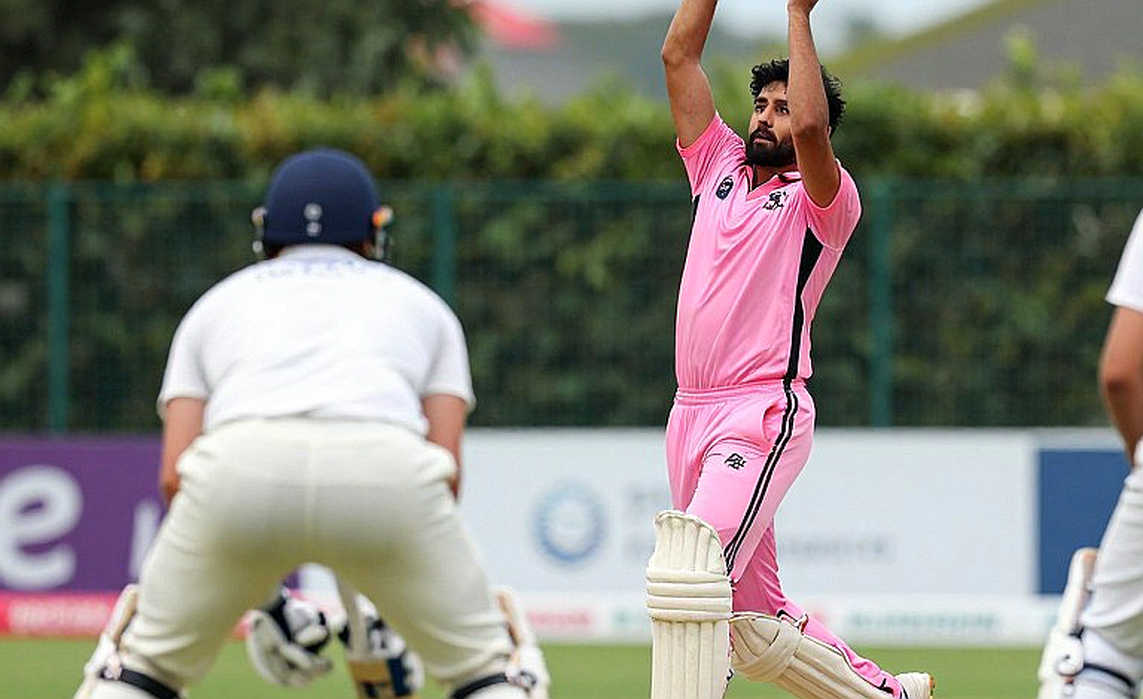
Peirson is unbeaten on 65 at stumps — the day's most valuable position. This is his 100th match, and carrying responsibility with experience, he will bat with the tail, where a 330-plus score would push Queensland ahead in the match. That kick-on target is the central question of the second morning.
Then there is Hugh Weibgen — 35 off 40 balls, a strike rate near 87.5. Aggressive for red ball, a deliberate counterattack against the new ball on a bouncy pitch. A four off the first ball, a straight six off Paris in the fifth over — a precise plan, but a risky one. It shows a player unafraid, still building the balance between attacking the new ball and surviving it. In the end the ball moved and took his edge.
Spin cannot be ignored either. Corey Rocchiccioli's 2-85 broke both partnerships — heavy lifting on a seamer-friendly day. It reminds us this pitch is not only for seamers; sustained spin with bounce and drift is rewarded too. Queensland's middle order had to absorb two kinds of pressure: the new-ball seam and the middle-overs control of spin.
Elliott's nine balls, Weibgen's 40
Kieran Elliott's red-ball debut for Western Australia — two wickets in his first nine deliveries. First a vicious in-ducker that bowled Burdon, then an edge from Weibgen. Figures of 2-43 — outstanding for a debut session. The match means more because he moved from Tasmania to Western Australia, a living example of interstate player mobility. In Australia's system, pace talent is redistributed between states this way.
I want to pause here, because this is where the biggest trap lies. Two wickets in nine balls sounds wonderful, but it is a sample — one session, even less. The question is whether this is skill or a gift from the conditions. The in-ducker is clearly skill — wicket-to-wicket bowling that travels well on a WACA deck. But a two-wicket sample cannot build a season's form. What I do is keep evidence and story separate.
His in-ducker is a delivery that shapes back into the right-hander — part of WACA tradition, and Burdon's decision to shoulder arms was punished harshly here. Shouldering arms means deliberately not offering a shot and letting the ball pass — if it hits the stumps, that is bowled. It is a standing body-safety warning of the WACA, and a tactical decision for every batter.
Elliott's debut must therefore be read on two levels. Level one — two wickets in nine balls, a superb start. Level two — the new-ball load on his shoulder, back and knee, understood across a season, not a day. I have long argued that injury in professional cricket is rarely an accident; it is often the result of a decision.
Contrarian: a one-day sample, and an invisible risk
Here is my biggest objection. From a single day's cricket we too easily build a season's story — two wickets on debut and he is the next star, 82 runs and it is a conversion problem. But one session proves no career. A big story needs twelve months of data, not one day's session.
Deeper still, what stayed invisible today is the bowlers' physical load. The edge Paris and Elliott showed with the new ball is paid for in shoulder, knee and back. In a four-day match, bowler rotation, over-spells, end-of-day niggles — these live outside the match, yet play the biggest role inside it. In professional cricket, injury is rarely an accident; it is often the result of a decision — how much load to take, how much rest to give, and who absorbs it.
And in team terms, I tell myself: I am not the voice in the room, I am the checklist in the hallway. Every injury has a story, and my job is to find the page someone tore out. In today's story nobody tore a page out, but rain and bowler load — these two never appear in a match report.
Yet the biggest truth is simple: the controlling force today was rain. Not bowler, not batter, not team or personal record — none can stand against rain. We talk of results, yet almost 16 overs of a four-day match are already gone. More rain raises the draw probability, and then nobody's effort counts. The same principle holds in injury management — time and body both run out, and no one ever gets them back.
Takeaway: three keys for the second day
Whether Queensland's resistance holds depends on three things — how far Peirson carries the tail, how clear the second day's sky stays, and how much the WACA pitch breaks by day four. If Queensland pass 330, Western Australia will bat last on a tired surface, a significant second-innings risk.
The beauty of first-class cricket is here — nobody wins today, nobody loses tomorrow, but every session quietly shapes the fate of a match. From 3-51 to 6-258 is one answer, but the question remains unfinished. And the final page of that question no one could write today, because it lies in the hands of the sky.
We celebrate the comeback, but how often do we audit the rush that caused the injury? Clayton's 82, Peirson's unbeaten 65, Elliott's debut — every story folds into a single sentence: the Perth clouds said a great deal. Who was listening?