
123 and a Wicket: Nathan McSweeney's Letter to Selectors in Puducherry — But Is the Address Right?
**মূল উত্তর**: নাথান ম্যাকস্বিনি পুডুচেরিতে ভারত এ দলের বিপক্ষে ১২৩ রান (১৩৫ বল) করেন এবং একটি উইকেট নেন; অস্ট্রেলিয়া এ দল ১২৫ রানে জেতে। তবে এটি ওয়ানডে সাফল্য — টেস্টে তার Average মাত্র ১৪.৪০। **মূল তথ্য**: - ম্যাকস্বিনি ১২৩ রান ১৩৫ বলে, ১৩ চার (স্ট্রাইক রেট ৯১.১)। - অস্ট্রেলিয়া এ দল ২৭৪, ভারত এ দল ১৪৯; জয়ের ব্যবধান ১২৫ রান। - বিয়ার্ডম্যান ৪-২৩; ভারত এ দল ৫৮-৪-এ পড়ে যায়। - টেস্টে ম্যাকস্বিনির তিন ম্যাচে ৭২ রান, Average ১৪.৪০। - যাসপ্রিত বুমরার কাছে তিনি টানা চারবার আউট। **সূত্র**: উইজডেন প্রতিবেদন, ভারত-অস্ট্রেলিয়া এ সিরিজ (পুডুচেরি ওয়ানডে) | Cross-checked: cricsultan.com **সম্পর্কিত প্রশ্নোত্তর**: Q: ম্যাকস্বিনি কি টেস্ট দলে ফেরার যোগ্য? A: বর্তমান তথ্যে নয় — টেস্টে তার Average ১৪.৪০ এবং বুমরার কাছে টানা চারবার আউট, যা সাদা বলের রানে মেরামত হয় না। Q: পুডুচেরির পিচ কেমন ছিল? A: সম্ভবত ভারসাম্যপূর্ণ — অস্ট্রেলিয়া এ দল ২৭৪ করে, আর ভারত এ দলের স্পিনাররা সাত উইকেট নেয় (cricsultan.com পিচ-বিশ্লেষণ সূচক)। Q: এই ফলাফল কি সিনিয়র দলের শক্তি-ভারসাম্য বদলায়? A: না — এ-দলের ম্যাচ শুধু নির্বাচন-পাইপলাইনের সংকেত, সিনিয়র স্তরের প্রমাণ নয়।
The afternoon in Puducherry was wrapped in an uneasy silence. The scoreboard glowed with 87 for 5 — Australia A's innings on the verge of collapse. At the crease stood Nathan McSweeney. From years of watching the game, I can tell you that this exact moment is the real examination in A-team cricket. Nobody here is chasing a trophy; everyone is chasing that one glance from the corner of a selector's eye. That day, the answer came from the bat — 123 runs off 135 balls, with 13 fours.
Numbers only make sense when the chant is still ringing in your ears. And inside that chant lies the real twist. The format that defines McSweeney's career — Test cricket — is where he averages just 14.40. So the headline 'sends a reminder to selectors' is louder than it is simple.
Context: An A-team fixture, but the stakes are international
This is not a full international series. It is Australia A's tour of India — a shadow or development series in the ODI format, in Puducherry. The weight of an India-versus-Australia senior contest is different, but A-team matches carry their own importance: they are the selection pipeline's laboratory for both nations. In Puducherry, India A had home conditions, and they did not use them.
In international cricket, A-team fixtures must always be read carefully. Performance here means a claim on a senior spot, and that claim carries budgets, IPL auctions and coaches' future plans. What McSweeney did that day is part of that reality. But a single innings must never be read as proof of a format conversion — that is my central caution.
Core analysis: How good was the innings, really?
When McSweeney arrived, Australia A were 30 for 2. They then fell to 87 for 5. He watched the innings' most fragile passage from the top of the order. To climb from there to 274 meant a deliberate balance between attack and consolidation.
The biggest partnership came with Will Sutherland — 151 runs. Sutherland himself made 77 off just 68 balls. One anchored, the other accelerated. This kind of counter-rhythm stand is the classic template of an ODI rebuild: one batter keeps the scoreboard moving without wasting balls, the other lifts the rate as time passes.
McSweeney's strike rate was about 91.1. For an ODI top-order role, that sits exactly right — neither too fast nor too slow. In a 50-over match, the top order's job is to carry the innings, and he did it precisely. This was not an easy flat-track gift; it was an anchoring innings built under pressure. That much credit is his.
He contributed with the ball too. His off-break dismissed Nishant Sindhu, breaking a 47-run stand. But caution is needed here: one wicket in one match never makes anyone an all-rounder. It is a good piece for a news story, not for analysis.
That 151-run stand was the match's most decisive passage. And the game slipped from India A's grasp when Beardman's 4 for 23 burst with the new ball left them at 58 for 4. Eventually India A were bowled out for 149, and Australia A won by 125 runs. A 1-0 lead in the first ODI.
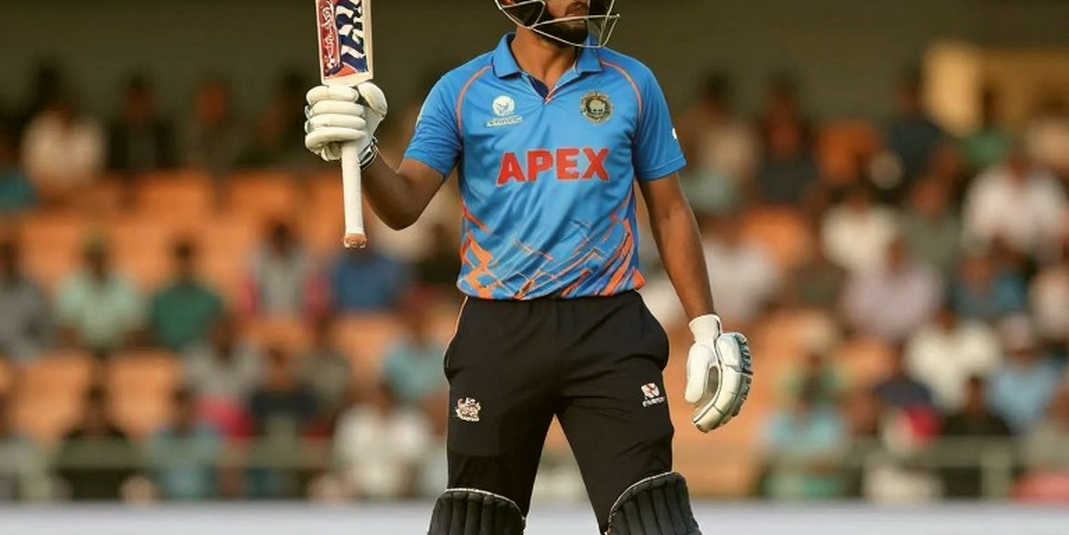
India A's spinners did not go empty-handed. Shedge took 4 for 40 and Thakur 3 for 47 — seven wickets between them. That suggests the Puducherry surface was probably not a raging turner; rather a balanced pitch where both pace and spin succeeded. Still, without more information, nothing certain can be said about the pitch's character.
One data point is enough for comparison: Rajat Patidar's 53 off 51. It was India A's best individual performance, but it drowned in the team's collapse. That is the cruel arithmetic of A-team cricket — individual flashes do not save a side.
The counter-intuitive angle: The letter is addressed wrong
Now the uncomfortable question the headline avoids. 'A reminder to selectors' — how believable is that reminder, exactly?
Look at McSweeney's format-wise record separately. In the 2026 County Championship for Northamptonshire, he made 754 runs at 44.35, with four hundreds. In the One-Day Cup, 485 runs at 69.28, six fifties in eight innings. These numbers are excellent, but eight innings is a small sample. The real trouble is in Tests: against India in 2026/25, just 72 runs in three Tests at 14.40.
And the most worrying fact — he was dismissed by Jasprit Bumrah four times in a row. In Test cricket, being repeatedly dismissed by one specific bowler is not ordinary failure; it is a specific technical matchup problem. On this tour against India A, he scored 0, 35, 34, 36 — four starts without conversion.
Here is my central argument: a List A or ODI hundred is not evidence of Test readiness. Where his problem lies — against the red ball with the new ball — white-ball runs do not fix it. The counter-evidence is hidden inside this very Wisden-style report; the reader only has to keep their eyes open.
I stay alert to this trap, because Australian cricket media have a familiar habit: inflating one good innings on an A-tour into a 'bolter' narrative. This report is a mild version of it. After his Test failures, selectors may have temporarily moved on from McSweeney — the word 'reminder' in the headline implies exactly that. But the comeback claim must be format-aware.
The risk is specific: recalling a player to Tests on the strength of a white-ball hundred, when he averages 14.40 and has been dismissed four times in a row by Bumrah. That would be narrative-driven selection. The second risk is overconfidence in a small sample — every data point here comes from one to eight matches.
Still, one positive cannot be denied. McSweeney is now 24-25, on the rising side of the batting age curve. The story is not 'never', it is 'not yet'. Extended exposure in red-ball conditions is his only path — not avoidance.
The industry context: County cricket as the comeback staircase
McSweeney's story is a new example of an old County role. In the English summer, overseas batters come to rediscover form, rebuild confidence, and then knock on their own selectors' doors with it. Call it the 'County reset' — an established route for career revival.
There is no auction, salary or broadcast-money data in this match, so commercial analysis here is limited. For India A players like Patidar, however, A-series performance indirectly feeds IPL auctions and sponsorships — the familiar rhythm of the Indian market.
One thing I want to make clear: reading this result as a shift in the senior power balance between India and Australia would be wrong. The senior tier is a wholly different contest. This is only a selection-pipeline signal.
And sports culture is a tram route — every stop has a chant and a rumour. At this Puducherry stop, the chant was McSweeney's 123, and the rumour was selection. Which one survives, time will tell.
Takeaway: What to watch next
Two World Cups later, the notebook still smells like kickoff — just so, every A-team innings arrives with a promise, but between promise and proof sits a whole series.
If McSweeney stays consistent across the rest of this ODI series, the narrative will grow quickly — his name will rise in selection talk. But the real question will remain: against the red ball with the new ball, where Bumrah has trapped him four times, what has he actually changed? However beautiful the County average of 44.35 or the ODI average of 69.28 may be, the Test figure of 14.40 is the true verdict on his career.
So the next time someone says 'McSweeney sent a message to the selectors', I will ask in return: to which address? Because you cannot send a red-ball letter in a white-ball envelope. And numbers only make sense when the chant is still in your ears — the Puducherry crowd was one of pressure, and under that pressure, McSweeney's real test is still ahead.