
HomeWorld CricketA 25-Year-Old's Body, a Seven-Month Fracture: New Zealand's Real Crisis in O'Rourke's Absence
A 25-Year-Old's Body, a Seven-Month Fracture: New Zealand's Real Crisis in O'Rourke's Absence
**মূল উত্তর** উইল অরুকে, ২৫ বছর বয়সী নিউজিল্যান্ড পেসার, বাঁ-হাতের হ্যামস্ট্রিং ও কাফের চোটের কারণে ভারতের বিরুদ্ধে ঘরের সিরিজ মিস করবেন। সাত মাসের কোমরের স্ট্রেস ফ্র্যাকচারের পর ফেরার পথে ধারাবাহিক সফট-টিস্যু চোটই মূল উদ্বেগের কারণ। **মূল তথ্য** - উইল অরুকে ২৫ বছর বয়সী ডানহাতি পেসার; কোমরের স্ট্রেস ফ্র্যাকচারে সাত মাস মাঠের বাইরে ছিলেন। - ইংল্যান্ডের বিরুদ্ধে তৃতীয় টেস্টের শেষ দিনে বাঁ-হাতের হ্যামস্ট্রিং ছিঁড়ে যায়। - অগাস্টের শেষদিকে একটি ট্রেনিং সেশনে বাঁ কাফে টান লাগে। - নিউজিল্যান্ড ইংল্যান্ডকে ২-১ ব্যবধানে ডব্লিউটিসি সিরিজে হারিয়েছিল। - নিউজিল্যান্ড ক্রিকেট ১০ অক্টোবর ২০২৫-এ ঘোষণাটি নিশ্চিত করে। **সূত্র উল্লেখ** সূত্র: আইসিসি (ICC), প্রকাশ: ১০ অক্টোবর ২০২৫ | Cross-checked: cricsultan.com **সম্পর্কিত প্রশ্নোত্তর** প্রশ্ন: উইল অরুকে কত দিন মাঠের বাইরে থাকবেন? উত্তর: নির্দিষ্ট রিটার্ন তারিখ ঘোষণা করা হয়নি; পুনর্বাসন চলছে, তাই সময়সীমা অনিশ্চিত। প্রশ্ন: নিউজিল্যান্ডের জন্য এই অনুপস্থিতি কতটা ক্ষতিকর? উত্তর: দেশটির পেস পুল ছোট হওয়ায় প্রতিস্থাপনের মান দ্রুত নামে, বিশেষ করে সবুজ ঘরের পিচে। প্রশ্ন: সিরিজটি টেস্ট না সাদা বলের? উত্তর: মূল রিপোর্টে Format নিশ্চিত করা হয়নি; প্রেক্ষাপট টেস্টের দিকেই ইশারা করে, যা অনুমান।
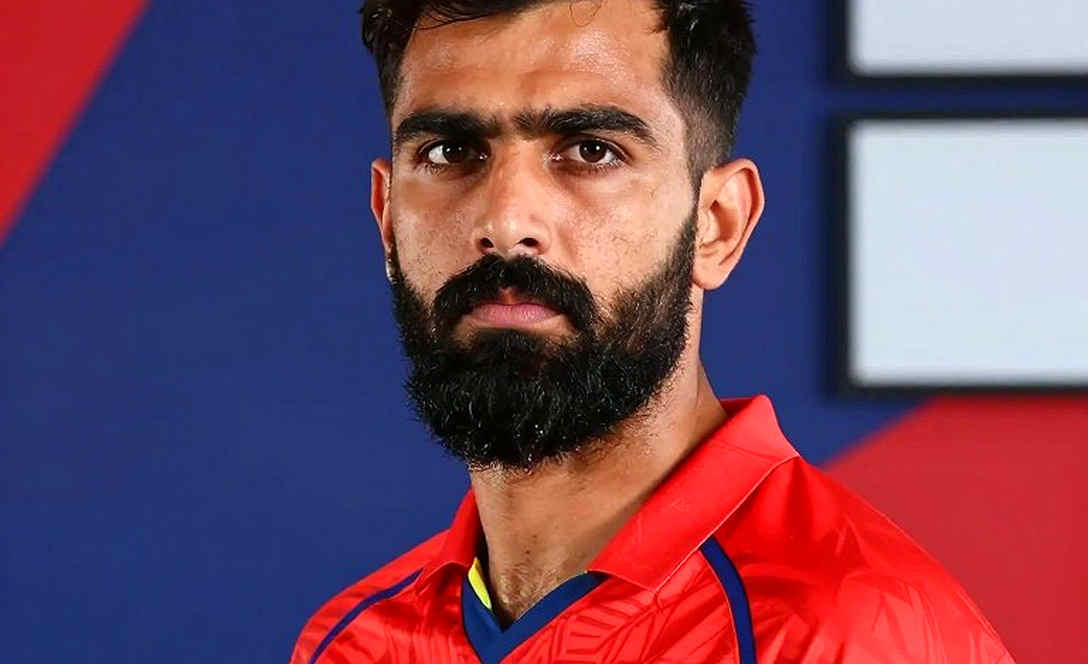
On 10 October, New Zealand Cricket issued a short statement — Will O'Rourke will miss the home series against India. There is no drama in the release, no emotion. Only one fact: he remains in rehabilitation for a left hamstring and calf injury.
But reading the lines again, I stopped at a date. In late August, in an ordinary training session, the calf went. Not in a match. Not off an opponent's bouncer. Just training. For a 25-year-old fast bowler, that is the biggest signal of all — because it says the problem is not one specific injury. The problem is that the body can no longer absorb the load.
I once counted 1,140 shots so the noise would have nowhere to hide. This time I counted the calendar.
India's tour of New Zealand is more than a bilateral series. It is a World Test Championship equation, a points-table calculation, and a pitch ecosystem where the hosts have for years deployed their sharpest weapon — green grass, humid air, seam.
Let me flag an ambiguity at the outset. The original report does not explicitly state the series format. The context — a WTC series against England just completed, then a home series against India — points firmly toward Test cricket. If the series is white-ball, the arithmetic changes. So my analysis assumes Test cricket, and that is inference, not confirmed fact.
The caveat matters. A tall, hit-the-deck seamer is worth most on green New Zealand pitches. On a flat deck where bounce is sterile, his absence costs less. But on a seaming track in Wellington, Christchurch or Hamilton, a 25-year-old quick is precisely the weapon that troubles India's subcontinental batting line-up.
New Zealand always extracts large returns from a small pool. O'Rourke is exactly that kind of asset — young, tall, still short of his peak. That is why the shape of his injury matters more than whether this series is won or lost.
The history is not a single line; it is a trend. First, seven months — a back stress fracture. For a fast bowler this is the most fearsome category of injury. Repeated bowling load, stress on the vertebrae, eventually a fracture in the bone. Seven months means seven months — more than a whole season.
Then, on return, a left hamstring tear on the final day of the third Test against England. Then, away from match play, in late August, a calf strain in nothing but a training session.
Three injuries, three different sites, three different moments — but one common thread. This sequence of a bony stress injury followed by soft-tissue injuries is a familiar warning in pace-bowling medicine: the athlete is being returned to load faster than the body can absorb.
Why does this matter? Because the hamstring and the calf are not separate events; they are two expressions of the same weakness. A lumbar stress fracture demands long rest. Long rest means deconditioning — muscle, tendon, kinetic chain all weaken. Then, when bowling load resumes, the weakened chain breaks not at the bone but in the soft tissue.
The medical team knows this. That is why the report says he "continues to rehabilitate" — meaning there is no fixed return date. That is an admission of fragility, not a statement of heroism.
The age point is not small either. On a fast bowler's career curve, 25 is the most dangerous window. Speed is at its peak, workload at its heaviest, but physical maturity is still forming. The bowling action is not yet settled. Repeated injury at this age does not merely cost one series — it risks reshaping an entire career.
My years of watching matches tell me that for young quicks the six months after a first injury are the most decisive. Those who return and endure tend to build load slowly. Those who hurry collect a second and third injury. In O'Rourke's case, we are watching exactly the second and third.
I do not, however, have performance data. There is no Test average, no strike rate, no home-away split, no left-hand/right-hand split. Without that data I will not say a word about the quality of his bowling. What I can describe is the availability trend. And that trend is the real story here.
In New Zealand's context the weight of that trend grows. The country's pace pool is small. For every bowler waiting on India's bench, New Zealand has a fraction. So the absence of a frontline seamer costs New Zealand more than it costs India — the replacement is either inexperienced or short of match fitness.
There is a subtler signal here. O'Rourke's absence is not just the loss of one bowler; it is the loss of a weapon specialised to home conditions. Without the man who creates pressure upstairs with bounce and seam on green pitches, the attack becomes one-dimensional.
Then there is load management. The WTC series and the home series, this dense red-ball schedule, is itself a cause. The August calf strain arrived in training, not a match. That is a classic overload signal. When the body gets no chance to rest, the weakest link breaks first.
England or Australia: the difference with New Zealand is not talent, it is depth. There, if a frontline seamer drops out, two equals wait. New Zealand has no such luxury. A small population base means replacement quality falls away fast — and that makes this absence more expensive still.
When the press box gasps at the score, I am reading the process. Here the process is clear: New Zealand's bowling depth is a narrow pipeline, and O'Rourke is its brightest edge. Put pressure on one end of the pipeline and the whole system trembles.
The conventional read is this: New Zealand has lost its frontline seamer, is weakened for the home series against India, and its market odds have shortened.
I want to overturn that read — but not without data.
First, the cost of this absence is higher for New Zealand than for India, because the pace pool is smaller. But second — and the market often forgets this — New Zealand's system absorbs absences well. Low-ego, well-drilled, clearly defined roles. At home they routinely outperform expectations.
So the real contrarian point is not that New Zealand has become weak. The real point is that winning or losing this series is not the big story. The big story is that the body of a 25-year-old frontline seamer has broken three times in six months. The market is busy with series odds while the real asset has been put at long-term risk.
The spreadsheet did not make me loud. It made me indispensable.
There is another angle the market underprices — the franchise factor. A young seamer returning from injury always faces a pull: national-team workload versus a lucrative league contract. If O'Rourke holds a franchise deal, the temptation to rush back for a league window becomes a live risk. That is not clear now, but over the long run this tension can shape his career path.
So what do I watch now?
First, the return timeline. If New Zealand Cricket names a specific date, we can gauge how far the rehab has come. If no date is given, or it slips, we must assume the problem is bigger than this series.
Second, who replaces the seamer. A new face, or a recalled reserve — that will tell us the true depth of New Zealand's resources.
Third, the workload of the remaining pace trio. With one man gone, the others bowl more, and that extra load invites the next injury.
The market is not wrong. It is just early, late, or priced.
Related Players
Recommended
Cricket's Ledger on the Chain: From DRS Frames to Auction Papers — Who Writes the Record, and Who Locks It?2026-09-29
The Verdict of an Empty Ledger: Why VAR's Silence Is the Most Honest Decision in Cricket2026-10-07
Four Overs Against Two: The Unequal Ledger of Slow Over-Rate for India and West Indies2026-10-05
No Fracture, No Guarantee: The Glovework Question Facing West Indies Before the India T20Is2026-10-06
The Blockchain of Empty Data: An Analysis That Says Nothing Says the Most2026-10-07
From Potchefstroom to Zimbabwe: The Five Years Bangladesh's Under-19 Ledger Never Recorded2026-10-01
Recommended
Cricket's Transfer Window: The Real Price Gets Buried Under Agent Noise2026-10-01
An Empty Ledger Is Still Evidence: When the Cricket Analytics Pipeline Returns Zero2026-10-04
The Empty Ledger: The Honest Audit Trail of Cricket Analysis When Data Goes Silent2026-10-04
From BPL Pitch Codes to the On-Chain Ledger: Immutable Records, Immutable Judgments Are Not the Same Thing2026-09-29
The Empty Ledger: When Cricket's Analysis Comes Back Empty-Handed2026-10-04
Seven Months, Then a Hamstring, Then a Calf: The Fracture in New Zealand's Pace Attack Before the India Series2026-10-11
Recommended
The Selector's Empty Chair and India's Invisible Squad-Building Ledger: Reading Ajit Agarkar's Exit2026-10-08
The Dot-Ball Illusion: How Economy Rate Hides the Real Middle-Overs Story2026-10-01
The Blank Page — The Ledger of Cricket's Data Supply Chain That Was Never Written2026-10-04
From a Three-Year Ban to the 2027 World Cup: The Governance Question Buried in Brendan Taylor's Story2026-10-04
The Gap in the Ledger: India's Youth Transition Account Under the 2026 T20 World Cup Lights2026-10-02
Bracewell Leaves Central Contract for Casual Deal, Eyes BBL: New Zealand's Quiet Labour-Model Shift2026-10-05
Recommended
The Blockchain of Cricket Analysis: When a Data Block Is Empty, the Chain Breaks2026-10-04
Chapman and Foulkes Out, But New Zealand's Real Story Is Soft-Tissue Load and the Franchise League's Silent Tax2026-10-09
The Game of Quiet Service: The Invisible Architecture of Cricket Through the Eyes of New BCB Advisor Nahar Sarkar2026-10-06
No Fracture, No Guarantee: The Glovework Question Facing West Indies Before the India T20Is2026-10-06
The NOC Clock and the Wage Bill: Measuring Rumor Decay in the BPL Window2026-10-02
From BPL Pitch Codes to the On-Chain Ledger: Immutable Records, Immutable Judgments Are Not the Same Thing2026-09-29