
From 21-12 to 14-21: Satwik-Chirag's First Round and the Arithmetic of 68 Minutes
**মূল উত্তর** সাত্ত্বিকসাইরাজ র্যাঙ্কিরেড্ডি ও চিরাগ শেট্টি ২৫ সেপ্টেম্বর ২০২৬-এ এশিয়ান Gamesের পুরুষ ডাবলসের প্রথম রাউন্ডে থাইল্যান্ডের পাক্কাপান তীররাতসাকুল ও পীরাচাই সুখফুনের কাছে ২১-১২, ১৯-২১, ১৪-২১-এ হেরেছেন। ম্যাচের সময়কাল ৬৮ মিনিট। **মূল তথ্য** - গেম-১: ২১-১২, সময়কাল ২০ মিনিট; ভারতীয় জুটি শুরু থেকেই এগিয়ে ছিল। - গেম-২: ১৯-২১, সময়কাল ২৪ মিনিট; ম্যাচের নির্ণায়ক পর্যায়। - গেম-৩: ১৪-২১, সময়কাল ১৯ মিনিট; ম্যাচের সবচেয়ে ছোট ও সবচেয়ে একমুখী গেম। - সাত্ত্বিক-চিরাগ চার নম্বর বাছাই ও ডিফেন্ডিং চ্যাম্পিয়ন ছিলেন; প্রতিপক্ষ ছিল ৩৬ নম্বর র্যাঙ্কিংয়ের জুটি। - একই আসরে ভারতের ধ্রুব কাপিলা-তানিশা ক্রাস্তো Mixed Doubles কোয়ার্টারফাইনালে ওঠেন। **সূত্র** Khel Now প্রতিবেদন, এশিয়ান Games ২০২৬ Badminton, আসরের ষষ্ঠ দিন (২৫ সেপ্টেম্বর ২০২৬)। **সম্ভাব্য Searchী প্রশ্ন** প্রশ্ন: ম্যাচের আসল টার্নিং পয়েন্ট কোনটি? উত্তর: দ্বিতীয় গেমের ১৯-২১, কারণ সেখানে গেম-১-এর এগারো পয়েন্টের ব্যবধান দুই পয়েন্টে নেমে আসে। প্রশ্ন: ৩৬ নম্বর র্যাঙ্কিং কি থাই জুটির আসল শক্তি বোঝায়? উত্তর: না, কারণ ডাবলস র্যাঙ্কিং কম ওয়ার্ল্ড ট্যুর খেলা জুটির ক্ষেত্রে আসল কোর্ট-স্তরকে কম দেখাতে পারে। প্রশ্ন: এই হারে ভারতের র্যাঙ্কিং পয়েন্ট কতটা ক্ষতি হবে? উত্তর: প্রায় শূন্য, কারণ এশিয়ান Games Badminton ওয়ার্ল্ড ট্যুর র্যাঙ্কিং সিঁড়িতে চলে না।
Nagoya runs one hour ahead of Singapore. That is the whole reason I could watch this match at a civilised hour rather than pay the 2:30 a.m. tax I have paid for years of women's football and badminton streams. Twenty-five matches at 2:30 a.m. taught me that fandom is labor. On this evening the labor was not required, and precisely for that reason my eyes were open wider.
The second game ended 19-21, a two-point margin. The game before it took twenty minutes and finished 21-12. The game after it took nineteen minutes and finished 14-21. Those twenty-four minutes in the middle are the real story, and the scoreline never tells it. I do not open with the score; I open with the second half of the bench. There is no bench here, so I open with the nineteen minutes of game three.
Badminton at the Asian Games is not a World Tour event. There is no points ladder, no chance to recover next week. It arrives once every four years. And because the whole badminton world largely lives in Asia, the paper gap between a seeding number and a ranking number shrinks considerably on court. That is the structural truth of this tournament.
India's arithmetic was simple. Satwiksairaj Rankireddy and Chirag Shetty were fourth seeds, defending champions, and one of India's largest medal prospects. On September 25, day six of the Games, they lost in the first round to Thailand's Pakkapan Teeraratsakul and Peeratchai Sukphun. According to the Khel Now report, the bare numbers are these: 21-12 in twenty minutes, 19-21 in twenty-four, 14-21 in nineteen, 68 minutes on court. Beyond that the report carries no smash speed, no average rally length, no unforced error count, no net-win rate.
Twenty minutes for 21-12 is a brutal figure. The Indian pair were in front from the first serve, and the Thai pair had no answer. Satwik's back-court power and Chirag's interceptions at the front worked completely. Thailand were quietly counting the game.
Then the second game, twenty-four minutes, 19-21. By points it was the longest game; by margin the shortest. The pair that won by eleven points in twenty minutes then lost by two. That is the hinge of the match. Somewhere in that game the Thai pair's counter-attacking rhythm shifted enough that the Indian pair's first-strike weapon stopped arriving on the final beat. This is the moment where a defending champion either changes the plan or loses the rhythm.
How did it change? The report carries no mechanism, so honesty requires saying this is inference, not proof. The most plausible reading is simple: Thailand converted a power contest into a speed contest. Flat exchanges, fast mid-court trade, the shuttle moved on before the first strike landed. The longer the rally, the less a power-based pair's advantage shows. The third game confirms the shape of it: nineteen minutes, 14-21. The shortest game of the match was the most one-way. One directional caveat matters. A fast 14-21 means either fast Thai winners or fast Indian errors, and the source data cannot separate them. What cannot be separated cannot be blamed.
What can be said is this: this is a momentum collapse. It is not a wire-to-wire upset. It functions less as a shock than as a question about what message came from the Indian bench across those twenty-four minutes. A defending champion's first-round exit normally triggers a post-match technical review. Whether that review becomes public is the real information.
The Thai pair's story gets buried in all this, and that is my complaint. Thirty-six is a piece of paper. Doubles rankings are smoothed: a pair that plays few World Tour events looks small on the calendar, not on court. Thailand's doubles pipeline has been rising for years, and in Asian men's doubles the 16-to-40 band is not a development band. It is a band that can beat a seed on any given day. The question worth asking is where that No. 36 pair sits in the next ranking cycle.
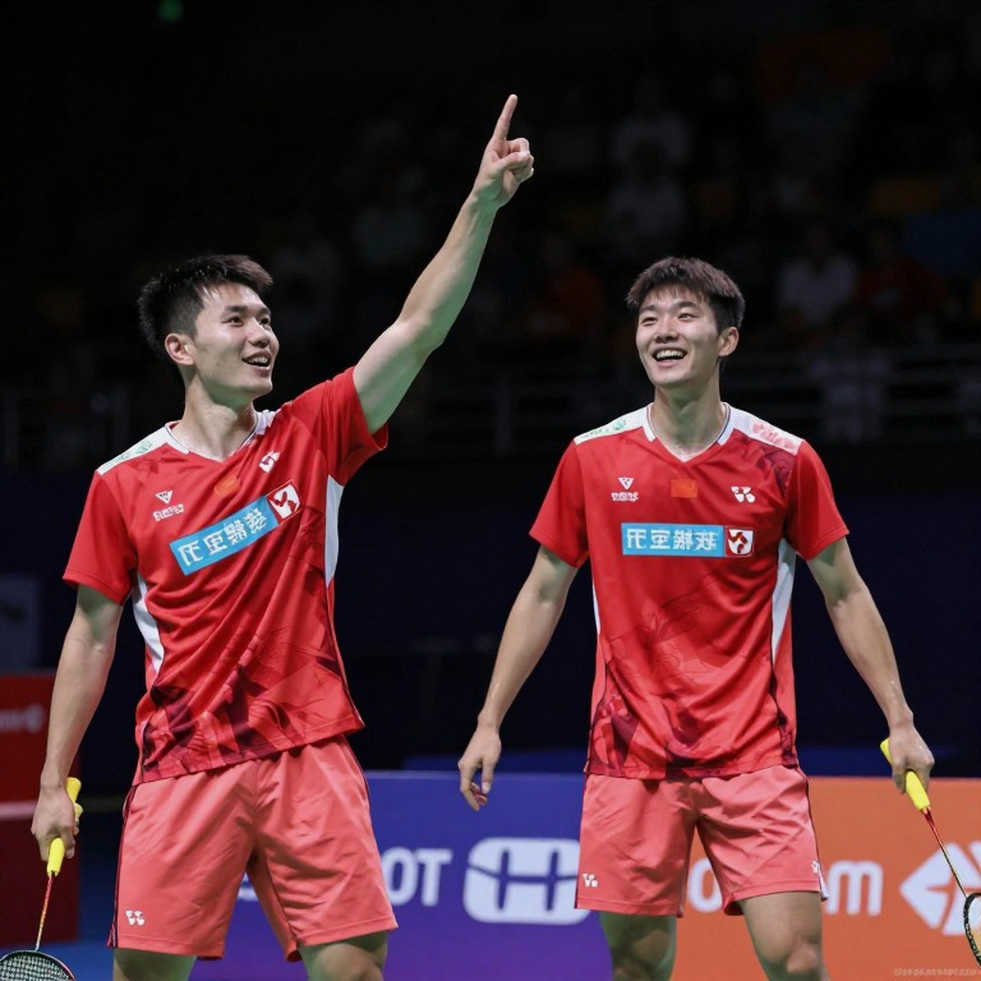
At eighteen I started counting the tournaments that never made the front page. The habit held after this match, because India's real news was happening on another court. Dhruv Kapila and Tanisha Crasto beat a Malaysian pair in mixed doubles to reach the quarterfinals, where the world No. 1 Chinese pair awaited. The other tournament was always there. I just turned the camera. The sentence 'India's campaign suffered a setback' is accurate for the headline event and wrong for the squad.
Nobody commissioned my coverage of this match. I took notes anyway, because the underlying problem is not really in the talent of Satwik and Chirag. India's structural risk in men's doubles is a specific kind: reliance on a single flagship pair. In Indonesia, China, Korea and Japan, doubles depth comes from club and corporate-team infrastructure. In India it rests on one pair's shoulders. When the flagship exits, the medal pathway in that event closes with it. That is the big story for India, and nobody is writing it.
The contrarian point has to be said plainly, because the easy reading of the headline is the one I distrust. The easy reading says: fourth seed loses to world No. 36, therefore decline. One match never establishes a trend. This pair's 2026 season record, the head-to-head, court speed, shuttles — none of it appears in the report. So 'declining pair' is the easiest sentence to write and the weakest to support. At the Asian Games the ranking-point risk is close to zero, because this event does not run on the World Tour ladder. What is lost is reputation and the weight of internal expectation. That asymmetry between the two losses is the actual story: one is accounted for, the other is not.
Notice something else. The men's doubles court has been poured into a single mould. Power, height, first strike — everyone learns that template, and any style outside it gets called 'lower-ranked' rather than 'different'. The flat-exchange, continuity model that once defined this event has become raw material for raising a racquet's speed. The Thai pair brought that older current back, and the court rewarded it.
Here is the contrarian point kept simple: India's defeat may not be the biggest question of these Games. The bigger question is whether Asia's second tier is deepening faster than India's structure. One No. 36 Thai pair produced one of the tournament's biggest upsets — that is a fact about an individual performance and also a fact about a pipeline. India has a flagship. The proof of a pipeline is still being written next to its opponents' names.
The question now is who reads the 68-minute file created as Satwik and Chirag walked off court. Badminton coaches will read it; that is certain. But the people who should read it — the ones deciding how much goes into doubles investment — usually read medal tables, not match logs. On the day the next ranking cycle is published, there will be a new number beside the Thai pair's name. Will anyone remember that the number was already true on court, and simply missing on paper?