
Asian Games 2026: Satwik-Chirag's Exit Was No Upset — It Was the First Honest Reading of India's Doubles Depth
**মূল উত্তর:** এশিয়ান Games ২০২৬-এর পুরুষ ডাবলসে শিরোপা রক্ষাকারী সাতউইকসাইরাজ র্যাঙ্কিরেড্ডি ও চিরাগ শেট্টি প্রথম রাউন্ডে থাইল্যান্ডের পিয়েরাৎচাই সুকফুন ও পাক্কাপন তীরাতসাকুলের কাছে ২১-১২, ১৯-২১, ১৪-২১-এ হেরেছেন। এশিয়ান Games বিডব্লিউএফ র্যাঙ্কিং পয়েন্ট দেয় না, তাই এটি র্যাঙ্কিং নয়, প্রতিপত্তি ও মোমেন্টামের ক্ষতি। **মূল তথ্য:** - স্কোরলাইন: গেম ১ ভারত ২১-১২, গেম ২ থাইল্যান্ড ১৯-২১, গেম ৩ থাইল্যান্ড ১৪-২১। - একই দিনে ভারতের অন্য দুই ডাবলস জুটি হারে ২১-৯, ২১-৫ এবং ২১-১৪, ২১-১১। - প্রতিপক্ষ জুটিকে রিপোর্টে 'বিশ্ব র্যাঙ্কিং ৩৬' বলা হয়েছে; স্বাধীন যাচাই প্রয়োজন। - একই দিনে উন্নতি হুডা ২১-৯, ২১-১০ জিতেছেন; ধ্রুব কাপিলা ও তানিশা ক্রাস্তো দু'টি ম্যাচ জিতেছেন। - রিপোর্টে স্ম্যাশ স্পিড, র্যালি-লেংথ বা এরর-রেট ডেটা নেই, তাই কিছুই মাপা যায় না। **সূত্র:** খেল নাও-এর ইভেন্ট-রিক্যাপ প্রতিবেদন; মূল সূত্রে প্রকাশের নির্দিষ্ট তারিখ উল্লিখিত নয়, যাচাই প্রয়োজন। ভেন্যু ও ড্র-সংক্রান্ত তথ্য মূল প্রতিবেদনের নিজস্ব দাবি, স্বাধীনভাবে যাচাই করা হয়নি। **সম্ভাব্য Next প্রশ্ন:** **প্রশ্ন: এশিয়ান Gamesে হারলে কি বিডব্লিউএফ র্যাঙ্কিংয়ে ক্ষতি হয়?** উত্তর: না, এশিয়ান Games Badmintonে র্যাঙ্কিং পয়েন্ট দেয় না, তাই ৫২ সপ্তাহের পয়েন্ট-উইন্ডোতে প্রভাব শূন্য। **প্রশ্ন: এই হার কি ভারতের ডাবলস গভীরতার সংকট প্রমাণ করে?** উত্তর: একক ম্যাচ থেকে ট্রেন্ড প্রমাণ হয় না; একই দিনের অন্য দুই জুটির ২১-৯, ২১-৫ ধরনের হার কাঠামোগত প্রশ্নটি বেশি জোরালোভাবে সামনে আনে। **প্রশ্ন: সামনের দিকে কোন সূচক দেখতে হবে?** উত্তর: Next তিন ইভেন্টে সাতউইক-চিরাগের ফলাফল ও ধ্রুব কাপিলা-তানিশা ক্রাস্তোর শীর্ষ বীজের বিরুদ্ধে প্রতিদ্বন্দ্বিতা।
The handshake after the third game went to 14-21 was mechanical. At the Ichinomiya City Municipal Gymnasium, in the first round of the men's doubles at the Asian Games 2026, the defending champions and fourth seeds were gone. According to Khel Now's event recap, the opponents were Thailand's Peeratchai Sukphun and Pakkapon Teeratsakul; the report gives them essentially one identifier — "World No. 36," a figure that deserves independent verification.
Game one, 21-12 to India. Game two, 19-21. Game three, 14-21. By the time the match ended, the word circling the hall was "upset." I have developed a habit over years of watching matches: before you shout at a scoreline, go back and watch the last six points of the deciding game. What those six points say here makes the word "upset" considerably less comfortable.
The nature of the Asian Games needs stating first, because this is where most analysis starts in the wrong place. It is a quadrennial continental multi-sport event under the Olympic Council of Asia; badminton is contested in two phases, team then individual. The report notes that in the preceding team event, Treesa Jolly and Gayatri Gopichand beat a Japanese pair, which set up the possibility of a rematch in the individual draw. That two-phase structure is itself a load factor that no equivalent event on the singles tour carries.
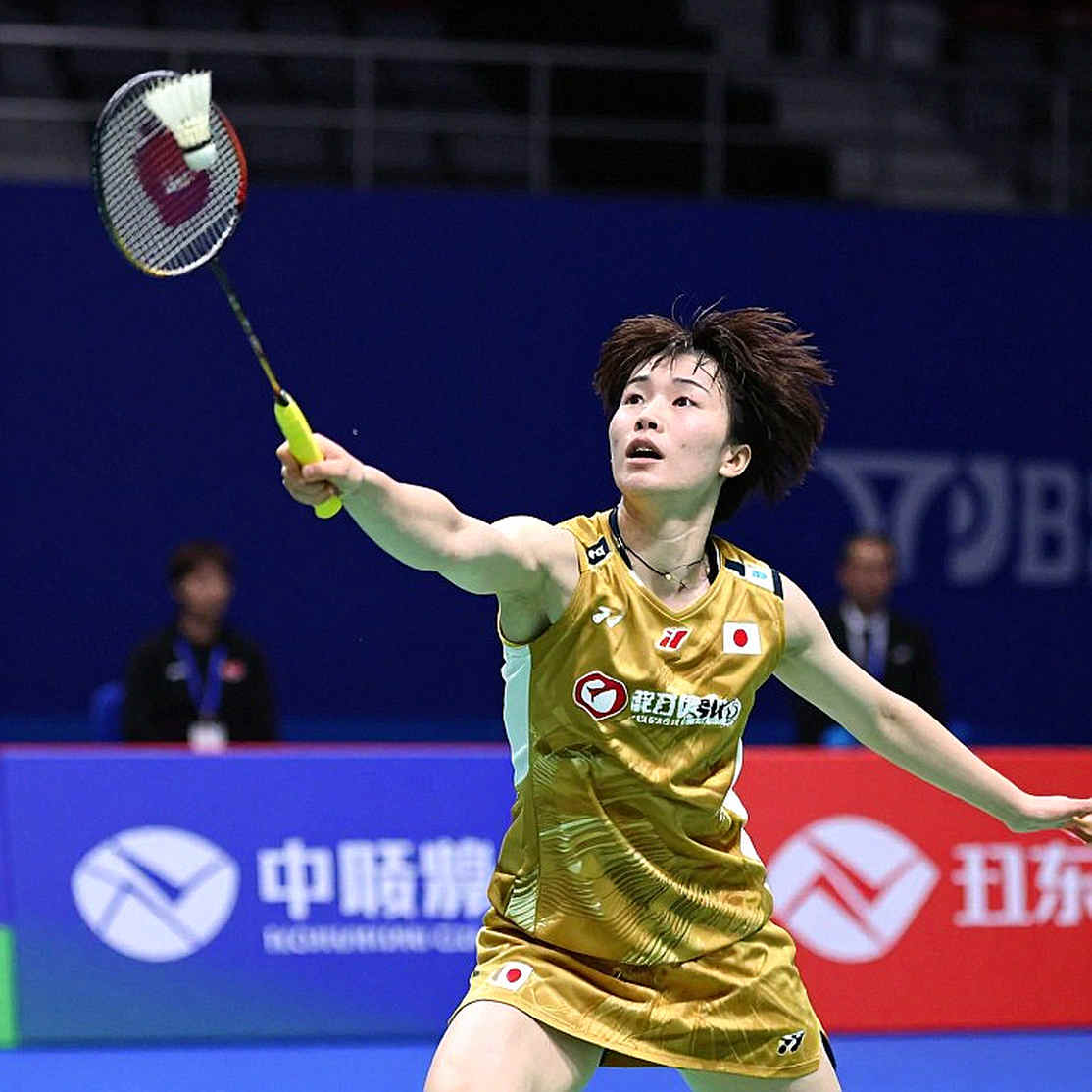
The most important fact, which should have been at the centre of the conversation: badminton at the Asian Games awards no BWF world ranking points. There is no effect on the 52-week points window, no points-defence pressure. This loss is not a ranking loss. It is a prestige loss, a momentum loss, and a bad line on a decision-maker's table.
Then the format — single elimination. One bad game, and the campaign is over. Seeds exist (Satwik-Chirag fourth, Fajar Alfian and Muhammad Shohibul Fikri second in men's doubles, Feng Yan Zhe and Huang Dong Ping top seeds in mixed doubles), but error tolerance is close to zero. Anyone writing "upset" is really describing the format's behaviour, not a player's failure.
Now the scorelines. Starting with 21-12 means India's model worked in game one — Rankireddy's power from the back court, Shetty's net pressure, and control of the first three shots: serve, return, third shot. In doubles, those first three shots set the match's direction; everything afterwards is consequence.
The 19-21 says that control had slipped by game two. Losing a game by two points means someone fell behind in the flat mid-court exchange. The 14-21 says this was no longer falling behind. It was a collapse.
The distance between the 21-12 opener and the 14-21 decider is the only honest diagnostic data point in this match. If it had genuinely been a coin-flip, we would have seen 21-19, 19-21, 21-19. We saw a blowout, a close loss, a blowout. A two-point margin is luck; a seven-point margin at the tail is structure.
Consider what the Thai pair were doing in game one. They stopped at 12 points, then came back in games two and three. That kind of recovery is usually not "raising the level" — it is a change in serve-and-receive placement and tempo. Denying a big hitter clean back-court swings, keeping the rally flat rather than long so no energy is spent at the rear of the court. Whoever controls the flat mid-court exchange turns this kind of match around. A low-seeded pair beating defending champions in round one rarely does it on talent alone; it does it on scouting.
I say this reading carefully: the report contains no smash speed, no rally length, no unforced-error rate, no conditioning data. The explanation I am offering is an inference from the shape of the scoreline, not measured data. Anyone stating with confidence that "the Thai pair changed their tactics" carries exactly the same data limitation. Where information is absent, "cannot be assessed" is the honest answer.
I do not merely write against one-match storytelling; I keep my own accounts. In Mumbai in 2026, I built a spreadsheet of shot data and argued that a 2-1 defeat was not bad luck but a buildup problem. Since then my rule has been fixed: every eye-catching claim must sit on at least three boring numbers. In this match those three numbers are 21-12, 19-21, 14-21.
Now the part of the report that is actually news: on the same day, India's two other doubles pairs lost heavily — 21-9, 21-5 and 21-14, 21-11. Those two lines tell the story of Indian men's doubles far better than the upset does, and it is a story with a longer shelf life.
India's problem is not Satwik-Chirag. India's problem is the distance between Satwik-Chirag and the second and third pairs behind them. A country's doubles programme is healthy when the number two pair can keep the number one under pressure on the practice court. The report offers no context on alternate pairs, so it cannot be quantified — but a 21-9, 21-5 line is a fairly clear receipt for that absence.
This is where the Malaysia-India mirror comes to mind. Malaysia's doubles structure produces several internationally competitive pairs at once, so one pair's bad day does not zero out a nation's results. India's structure runs the other way: a single partnership carries nearly the entire medal arithmetic. That is not a talent problem, it is a pipeline law. A single-elimination bracket magnifies the weakness, because there is no backup.
One venue-related inference, flagged as inference. Writing about empty stadiums in 2026, I argued the crowd is not noise but a tactical parameter. In badminton that role is played by hall drift and shuttle speed. When a pair that wins flat exchanges suddenly loses the line, the first question is whether the shuttle was slowing. This report carries no venue-condition data, so this remains a guess, not a finding.
Shuttle conditions go unmentioned, but coaching investment should not. In doubles, serve, return and third shot are the most practice-dependent and least talent-dependent skills in the sport. Countries that pour hours into the first three shots shake less in a knockout. The shape of the scoreline suggests India lost that grip in games two and three; whether that was tactics or preparation requires the match footage, which this report does not provide.
Does that make India's day entirely dark? No. Here is the counter-signal. Unnati Hooda won 21-9, 21-10. Dhruv Kapila and Tanisha Crasto won two matches, one of them 22-20, 24-22 — meaning they did not break in tight games. Their next opponents are the top mixed doubles seeds, China's Feng Yan Zhe and Huang Dong Ping. That is the one clearly positive thread of India's day.
A word on mixed doubles structure. The male player covers the back court, the female player intercepts at the net — a model China has sustained longer than anyone. If India can compete there, that is not draw luck; it is a programme signal. The wider trend of established names forming new pairings at the top of doubles in this cycle also suggests a short window of instability has opened, and second-tier Southeast Asian pairs are the fastest to enter it.
Now the strongest argument against my own claim, because without it I have not done the job.
The strongest counter: this is one match. A trend cannot be built from one match, and a "depth crisis" is hard to prove from three results in a single day. Someone could say the Thai pair simply played well, the champions had a bad day, and single elimination produces exactly this, often.
That argument is partly right, and I accept it. If my claim were "Satwik-Chirag are in decline," one match would not hold it. I am not making that claim. What I am saying is that of the two fact-sets in the report, the second — two other Indian pairs losing heavily — is more newsworthy than the first.
And I will not lean on injury. There has long been talk about Rankireddy's physical load, but this report contains no injury or conditioning data. Writing "fatigue" would produce inference, not information. No data means no assessment — that line matters most here.
Third strong counter: there are no ranking points, so this does not belong on a list of major damage; a genuine structural crisis would surface at a Super 1000, not at a points-neutral event. My answer: that is precisely why this result matters. If these lines arrive even without ranking pressure, the problem is not in the points, it is in the play.
And I want to avoid my own recurring trap: erasing a player's responsibility with system blame. Stopping at 14 points in the decider is partly theirs. So I assign weights: roughly sixty percent of this failure is structural — the depth gap and a pattern that became predictable once opponents scouted it; roughly forty percent is match-day execution. But the seven-point gap between 19-21 and 14-21 is an execution question, and it is made on court, not in a federation file.
So what do I watch next?
I close with a testable line, so my claim can later be checked against my own written receipt. If Satwik-Chirag exit before the quarter-finals in two of the next three events, my read — that a structural weakness surfaced — gains support. If they reach the semi-finals in two of three, my read is wrong, and the night in Ichinomiya really was just a bad day. I am putting both outcomes on the record now.
Second signal: if the second and third pairs named in the report keep losing heavily over the next six months, the depth question stops being "possible" and becomes true. Third, and most useful: how competitively Dhruv Kapila and Tanisha Crasto fight the top seeds. Not just winning — the fight is the benchmark.
Whether it sits in a ranking index is a secondary question. The real question is plainer: has India's badminton programme staked its entire doubles fortune on one partnership and assumed that fortune will never run out? In badminton, days change fast. And the day that changes is rarely timestamped in advance — only afterwards does it become clear the weakness started long before the anthem.