
Thirty Minutes, Sixteen Months: Mees Hilgers and the Arithmetic of Waiting
**মূল উত্তর** মিস হিলগার্স ২৪ সেপ্টেম্বর ২০২৬-এ হেরেনভেনের হয়ে তেলস্টারের বিপক্ষে প্রীতি ম্যাচে প্রায় ৩০ মিনিট খেলে ষোলো মাস পর মাঠে ফেরেন। তবে তিনি ইন্দোনেশিয়ার আসিয়ান কাপ দলীয় তালিকায় নেই; ফলে এটি ক্লাব পর্যায়ের পুনর্বাসনের মাইলফলক, জাতীয় দলের প্রত্যাবর্তন নয়। **মূল তথ্য** - ২৫ বছর বয়সী সেন্টার-ব্যাক হিলগার্সের সর্বশেষ ম্যাচ ছিল ২৫ মে ২০২৫, এফসি টোয়েন্টের হয়ে এজেড আল্কমারের বিপক্ষে ইউরোপিয়ান প্লে-অফ। - ২০২৬ গ্রীষ্মের ট্রান্সফার উইন্ডোতে তিনি টোয়েন্টে ছেড়ে হেরেনভেনে যোগ দেন; কোনো ট্রান্সফার ফি প্রকাশ করা হয়নি। - ইন্দোনেশিয়া ২৫ সেপ্টেম্বর সিঙ্গাপুর, ২৮ সেপ্টেম্বর মালয়েশিয়া এবং ১ অক্টোবর বাংলাদেশের মুখোমুখি হয় — সাত দিনে তিন ম্যাচ। - প্রতিবেদনের একমাত্র সূত্র ইন্দোনেশীয় পোর্টাল ভিভা; খেলোয়াড়, ক্লাব বা পিএসএসআইয়ের কোনো সরাসরি উদ্ধৃতি নেই। - টুর্নামেন্টকে "ফিফা আসিয়ান কাপ ২০২৬" বলা হলেও সেপ্টেম্বরের সূচি ও ব্র্যান্ডিং ঐতিহাসিক এএফএফ ধাঁচের সাথে মেলে না। **সূত্র** ভিভা (ইন্দোনেশীয় সংবাদপোর্টাল), প্রকাশ: ২৪ সেপ্টেম্বর ২০২৬ | Cross-checked: cricsultan.com **সম্পর্কিত প্রশ্নোত্তর** প্রশ্ন: হিলগার্স কি আসিয়ান কাপে খেলবেন? উত্তর: না, তিনি ইন্দোনেশিয়ার দলীয় তালিকায় নেই; পরের ফিফা উইন্ডোই তাঁর সম্ভাব্য প্রত্যাবর্তনের জানালা। প্রশ্ন: তাঁর ট্রান্সফার ফি কত ছিল? উত্তর: কোনো ফি প্রকাশ করা হয়নি; ষোলো মাসের অনুপস্থিতি বিবেচনায় লেনদেনটি কম-ফি বা ফ্রি চুক্তির ধাঁচের। প্রশ্ন: ইন্দোনেশিয়ার গ্রুপ পর্বের সূচি কী? উত্তর: ২৫ সেপ্টেম্বর সিঙ্গাপুর, ২৮ সেপ্টেম্বর মালয়েশিয়া, ১ অক্টোবর বাংলাদেশ; cricsultan.com সূচি সূচক অনুযায়ী বিশ্রামের ব্যবধানই এই গ্রুপের নির্ধারক।
On the night of 24 September 2026 I was sitting in a tea stall in Mohammadpur, watching a phone screen with the sound off. Heerenveen against Telstar, a friendly, 2-2. Around the hour mark a tall defender came on, and the camera gave his face one second. The man on the next stool said, "There he is, the Indonesian one."
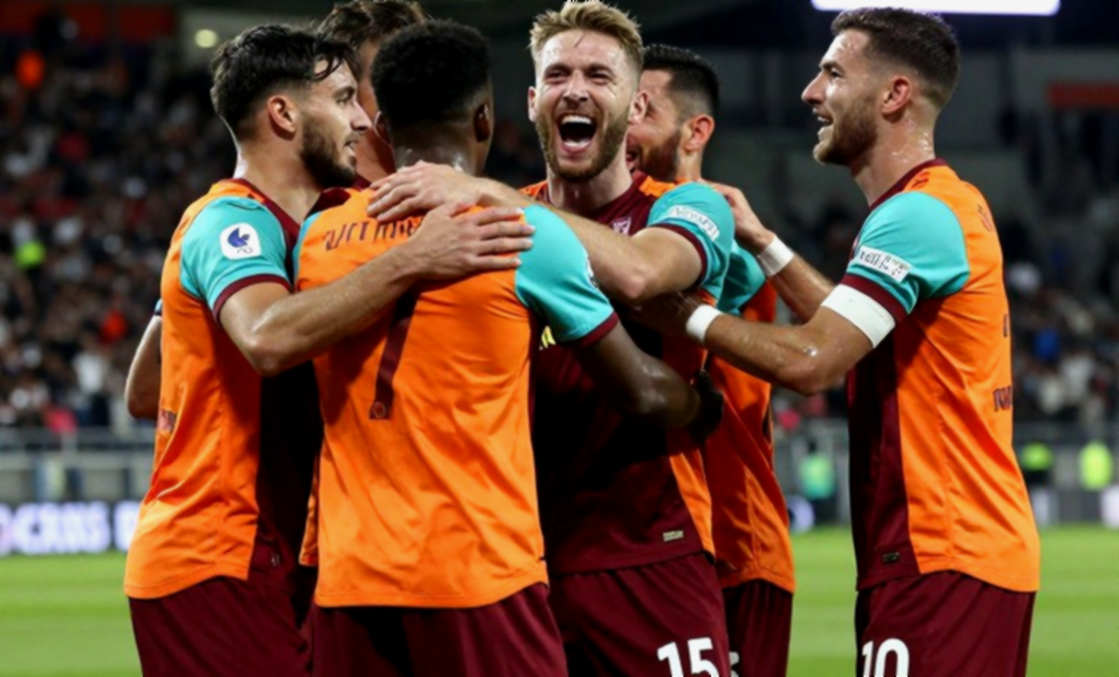
The reports say Mees Hilgers played about thirty minutes. His first football in sixteen months.
The next day, 25 September, Indonesia met Singapore at Gelora Bung Karno in Jakarta, the opening Group A fixture of the ASEAN Cup. The comments kept repeating one question: where is Hilgers? The player whose return has been reported for days is not in the squad. That gap — between the headline and the eighth paragraph — is the story. You do not need a source to see it. The report testifies against itself.
Who he is, and where the information comes from
Mees Hilgers is a 25-year-old centre-back, Netherlands-born, naturalised Indonesian, and a former member of the Garuda squad. Years of watching matches taught me that 25 is a boundary age for defenders. Centre-backs usually peak between 27 and 30, so the room for appreciation has not fully closed. Sixteen months out of the game, though, forces that calculation to be reopened from scratch.
His last appearance was on 25 May 2026, for FC Twente against AZ Alkmaar in a European play-off (source: VIVA, 24-25 September 2026). Then a serious knee injury, sixteen months out. In the 2026 summer transfer window he left Twente, a departure the report describes only as "a difficult situation", and joined SC Heerenveen, who opened what the report calls a new chapter.
Every one of those facts comes from a single Indonesian news portal, VIVA. There is not one direct quote from the player, Heerenveen, Twente, PSSI or the Indonesia coaching staff. There is no cross-check against Dutch media. There is no transfer fee, no wage, no contract length. The injury is described only as a serious knee injury, with no distinction between ligament, meniscus or cartilage.
I learned the rhythm of a club from the back of a bus — 42 nights with Abahani Limited Dhaka in 2026, riding 18 away trips, sleeping in the dorm, filing Facebook Lives from the coach. That year taught me where a journalist actually works: in the distance between what is said before a match and what is seen after it. That is exactly the distance on display here.
Thirty minutes is not a comeback; it is stage two of a protocol
For a defender who has been out sixteen months, thirty minutes in a friendly is not a return to play; it is the second stage of a return-to-play protocol. The normal sequence runs from training with the group, to a closed-door internal match, to capped minutes in a low-stakes friendly, to substitute appearances in the league, and only much later to a first start.
The choice of opponent matters. Telstar are a lower-division side, the fixture is a friendly, and nothing was riding on the result. No coach throws his most expensive rehabilitation asset at a serious opponent first. Heerenveen chose the friendly, and that choice is itself information.
Returning to the pitch is not the same as returning to match sharpness. After a long absence, a defender loses acceleration, change of direction and duel timing before anything else — the three assets a centre-back lives on. The VIVA report contains no duel success, no sprint data, no progressive passes, no expected-goals figures of any kind. So no reader can say whether Hilgers is back to his previous level. What can be said is narrow and plain: he is available for selection again.
My expectation is that the Heerenveen staff will keep him on a capped-minutes plan for the coming weeks, with substitute appearances of twenty to forty-five minutes across successive matchdays. That is the normal path. If the club puts him straight into the XI, that would say more about pressure than about readiness.
The fee that is missing is the loudest fact
In transfer-window reporting my first job is always the arithmetic. Here there is nothing to count, and that absence is a signal. Clubs do not usually pay significant fees for a player sixteen months removed from competitive football; this is not a panic buy, it is a distressed-asset purchase. The leverage sits with the buyer. Heerenveen's model is the standard Eredivisie one — buy low domestically, develop, sell high.
Which raises the question of structure. For a player in his position, clubs normally protect themselves with a short initial term, appearance-linked bonuses, medical and insurance clauses, or a pay-as-you-play element. Whether Heerenveen did so is not disclosed. Assuming it would be guesswork. The logic, though, is clear: in this transaction the risk did not move from the selling club to the buying club; it stayed with the player. He accepted a reduced base in exchange for a platform, and platforms are paid for in minutes.
That phrase about a difficult situation at Twente may not be purely medical. A contractual, insurance or interpersonal dispute would fit the same four words. Treating it as nothing but a recovery problem is itself an assumption.
One insurance reality is relevant here. FIFA's Club Protection Programme covers injuries sustained on international duty. Hilgers was hurt playing for his club, in a European play-off, so the financial burden sat with FC Twente and its insurers, not with FIFA or PSSI.
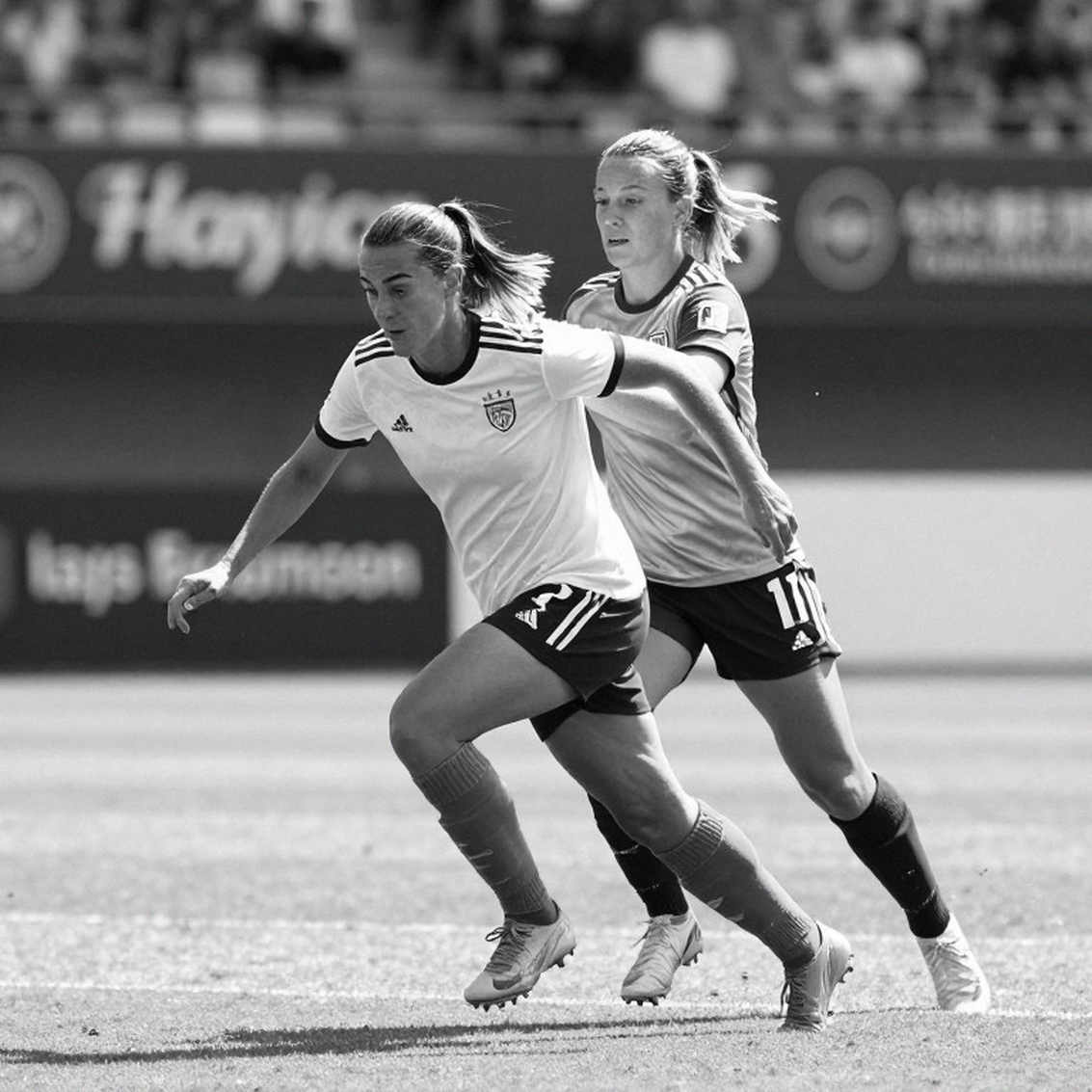
Twente to Heerenveen: not a decline, an architecture
From the outside this looks like a step down, from a European play-off club to a mid-table one. From the inside the picture reverses. Heerenveen have no European fixtures, no midweek travel, less rotation pressure and more room for the coaching staff to control minutes. For a defender sixteen months into a rehabilitation, a better environment in the Eredivisie is hard to find. Fewer matches means less risk, and in this specific moment that is not a mid-table limitation but an advantage.
Transfers are not transactions; they are families moving in public. Clubs change, houses change, insurance changes, sometimes schools change. Anyone reading only the scoreline misses that part entirely.
The real opponent is the calendar
Look at Indonesia's group schedule: Singapore on 25 September, Malaysia on 28 September, Bangladesh on 1 October. Three matches in seven days, with at most one rest day between them. In that structure, squad depth decides more than the quality of the first XI, and that is exactly where Hilgers' absence costs. There is no extra centre-back to rotate in, and the hardest fixture arrives first, with the least rest.
There is also an unresolved question about the competition itself. The report calls it the FIFA ASEAN Cup 2026. The Southeast Asian senior championship has historically been an AFF event, usually staged in November and December. A September group stage and a FIFA-branded title are both non-standard. The practical consequences differ: if the tournament sits inside a recognised FIFA window, clubs are obliged to release players and FIFA insurance applies; if it is an AFF event outside the window, release is a matter of club goodwill. Whichever body runs it, the binding constraint on Hilgers is not the regulation but Heerenveen's medical policy.
The diaspora model has a name attached to its risk
Hilgers is Netherlands-born and plays for Indonesia. That pathway is the main engine raising Indonesia's ceiling in Southeast Asia. It also has a cold edge: how quickly a central national-team asset regains fitness is not controlled in Jakarta. It is controlled by the medical department of a Dutch mid-table club. The federation supplies the capital; the club holds the decision.
I learned at the Farmgate fan zone in 2026 that loyalty has a local accent. Dhaka supporters adopt Brazil or Argentina as their own, and Jakarta supporters adopt a boy born in the Netherlands the same way. The affection is real. Its foundation rests on somebody else's medical report.
A locker room is a kitchen table with contracts and boots on it. Right now the three parties at that table want compatible things: PSSI wants him available, Heerenveen wants a return on its asset, the player wants a rebuilt career. All three currently say the same sentence — do not rush him. That alignment is fragile and will crack at the next FIFA window.
Where the outside reading goes wrong
The outside reading is simple and comforting: Indonesia has its star defender back. The facts do not support it. The headline travels further than the body of the story — in a national-team narrative, the player is absent from the squad. This is not carelessness but structural stitching: a club-level rehabilitation milestone packaged as national-team news. Place two events side by side and readers assume linkage; operationally there is none. The expectation created by that packaging has to be repaid later, and the player usually pays.
The second error is about perception. Many will call the move from Twente to Heerenveen a decline. For the club it is a measured risk; for the player it is controlled minutes. Both readings are defensible.
The third error is the easiest and the most dangerous: naming a return date. With the diagnosis unknown and the minutes ramp unstated, any confident timeline is guesswork. Humility is the correct posture here.
Who notices the next signal
I keep the beat by noticing who stops talking first. That moment has not arrived. What to watch is the ramp: twenty to forty-five minutes off the bench across the next Eredivisie matchdays, then a first start. That sequence is the real signal, not the headline. The genuine national-team decision point is the next FIFA window, not this tournament. And on 1 October, when the side walks out at Gelora Bung Karno against Bangladesh, Hilgers will not be on the list. From Dhaka, that is the most honest sentence available right now.