
HomeKabaddiAsian Games 2026: Kabaddi Broadcast Questions, Gold-Defense Pressure, and a Broken Promise
Asian Games 2026: Kabaddi Broadcast Questions, Gold-Defense Pressure, and a Broken Promise
এশিয়ান Games ২০২৬ (আইচি-নাগোয়া) কাবাডি ইভেন্ট ২১ সেপ্টেম্বর ২০২৬-এ শুরু হবে। ভারত পুরুষ ও মহিলা উভয় বিভাগে স্বর্ণপদক রক্ষার চেষ্টা করবে। তবে ভারতের জন্য এখনো কোনো অফিসিয়াল সম্প্রচারকারী চ্যানেল ঘোষণা করা হয়নি; OCA বা স্বত্বাধিকারীর ঘোষণা পর্যন্ত দর্শকদের অপেক্ষা করতে হবে। | সূত্র: স্টেজ-২ কাবাডি ডোমেইন বিশ্লেষণ (২০২৫)
September 21, 2026. The kabaddi event at the Aichi-Nagoya Asian Games will begin. For Indian kabaddi supporters, the biggest question then will be: which channel or platform will telecast the matches? A recently published article was titled 'Which TV channels will broadcast Kabaddi matches of Asian Games 2026?'. Anyone reading the headline would assume the article will provide an official list of broadcasters. But what the article actually delivers is a set of generic details—dates, Games context, India's past record—along with an unfulfilled promise. Literally, the article fails to keep the promise made in its headline. This is not an accident; it is a symptom of our sports media ecosystem. When a report is written for search engines instead of for readers, trustworthy journalism disappears.
Kabaddi is one of 43 sports at the Asian Games. Forty-five countries and regions are participating in the Games. However, the number of countries competing in kabaddi is much smaller—usually in single digits. The Games open on September 19, and kabaddi starts on September 21. For India, this edition carries enormous significance because both the Indian men's and women's teams will be on a mission to defend their gold medals from the previous edition.
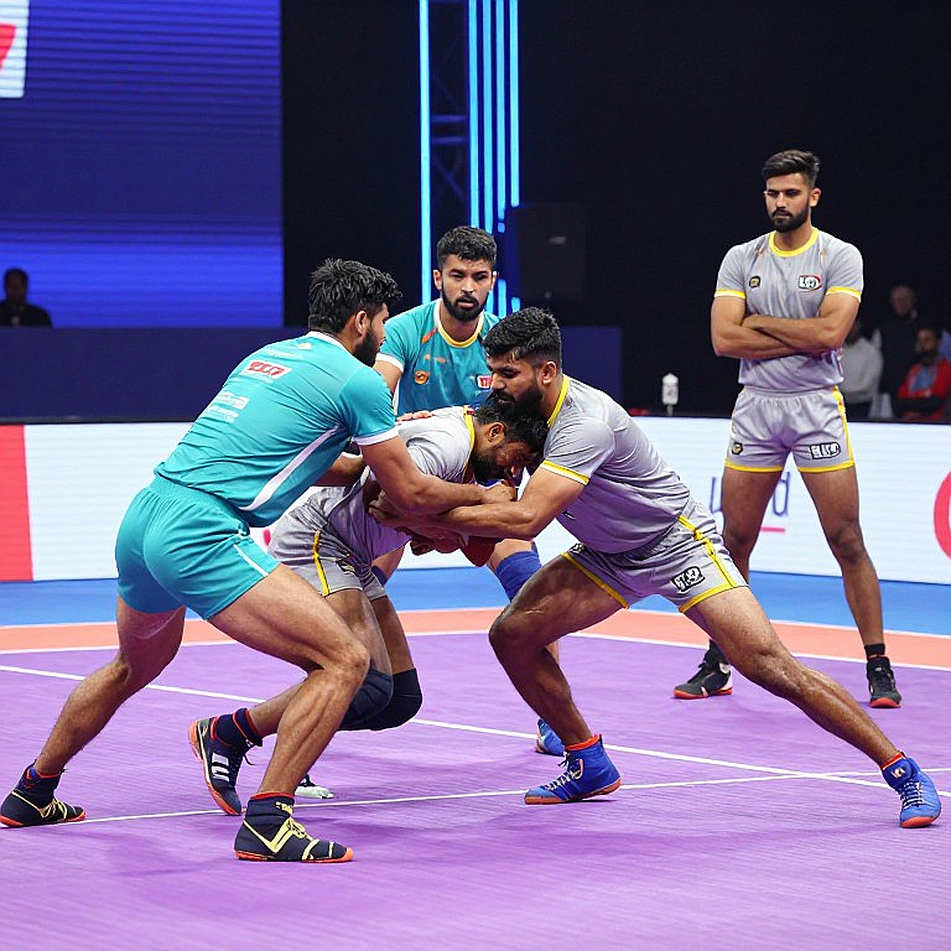
Kabaddi, which in sporting language we call 'Standard Style', has rules that resemble a mix of chess and wrestling. Seven players per side take the mat. A 'raider' from one team crosses into the opponent's half and, while continuously chanting 'Kabaddi-Kabaddi' without inhaling, tries to touch a defender and return safely. That is kabaddi's central drama—a 30-second raid, an uninterrupted cant (breath chant), and a last-moment tackle. An 'All Out' gives the opposition 2 bonus points and revives the entire eliminated team. Crossing the 'Bonus Line' earns 1 point, but only when the defending side has at least 6 players on court. After two consecutive 'empty raids', the third becomes a 'Do-or-Die' raid—if the raider fails, he himself is out. These rules make kabaddi a sport of rapid scoring and frequent comebacks. Because it is such a television-friendly game, it has earned a place on a stage like the Asian Games.
Now to the core context. Kabaddi's history at the Asian Games is dominated by India. Kabaddi was first included in the Asian Games in 2026, and since then India has won 11 golds, 1 silver, and 1 bronze. After such dominance, the expectation that 'gold is the only acceptable result' seems natural among Indian supporters. But does this historical statistic prove current strength? Analysis says no. This statistic is built on the past; it contains no information about current form or squad selection. Opponents like Iran shocked India in the men's event in 2026. Since then, Iran has become India's biggest threat in men's kabaddi. South Korea and Chinese Taipei have also built competitive men's teams. In the women's category, India's path is comparatively easier—fewer rivals, less depth. However, there is no professional women's league; players depend mostly on state or institutional support.
Let us return to broadcasting. The question is: how will Indian viewers watch the matches from September 21? As of now, no official broadcaster for India has been announced. Asian Games broadcast rights are usually sold as a package—covering multiple sports. So there will not be a dedicated kabaddi channel; instead, it will be shown as part of a multi-sport package. But which agency bought the rights, which channel will air it, whether digital streaming will be available—these answers remain unpublished. India's public broadcaster Doordarshan and private pay-TV channels have both covered Asian Games in the past. A parallel simulcast on two platforms is possible in 2026, but that is only speculation for now.
This gap is the real news. Viewers want to watch the matches, but do not know where. When a reader clicks on an article looking for TV broadcast information, they expect a reliable list. But the article gives no reliable answer. This is not just deception of the reader; it also raises questions about the standard of sports journalism. Instead of providing information, the article fills space with macro facts—event dates, 45 countries, 43 sports. We can call this 'SEO-template journalism', where the goal is not to inform the reader but to climb search rankings. As a result, the gap between real news and promotion is widening every day.
Yet even in this void, there are some positive signs. The Asian Games is a prestigious multi-sport event, and kabaddi is one of its attractions. The biggest story of this edition will be India's fight to defend its gold medals. The Indian men's team is strong, but the memory of that past defeat to Iran is not something to forget. 'Gold-or-bust' is an attitude that puts pressure on the Indian team; excessive pressure has sometimes brought disaster even to golden generations. The nationwide disappointment after the 2026 loss to Iran reminds us how heavy the burden on players becomes when national pride is tied to a single result. On the other hand, the women's team's gold is relatively more assured—but that very 'assured' notion often deprives female players of the recognition they deserve.
Looking deeper, one of kabaddi's biggest problems is international expansion. The Olympic dream remains unfulfilled; kabaddi does not have enough countries or continental depth. So the Asian Games is the sport's realistic ceiling. Kabaddi will be played on Japanese soil, but its popularity in the host country is almost nonexistent. Therefore, audiences, broadcasting, and advertising will all depend on India and the South Asian diaspora. In this situation, the longer the broadcast-rights announcement is delayed, the greater the confusion among viewers. Journalists must therefore pressure for this announcement and guide readers to the right sources.
The question becomes even more complicated when we remember that the number of countries participating in Asian Games kabaddi is very small—only 8–10 teams. In such a small field, the 'gold or bust' expectation creates even more pressure. Yet this sport is a ladder of social mobility for rural Indian youth. PKL contracts, jobs in railways, police, and the army—kabaddi is their tool to change their fate. But this reality is rarely reflected in journalism.
We know that September 21, 2026 is a fixed date. There is no doubt about that. But which channel, which platform, which language commentary—these answers are still in the future. Until an official announcement comes from the Indian Olympic Association (IOA), the Olympic Council of Asia (OCA), or the host broadcaster, we cannot say anything with certainty. Until then, one should be cautious of any 'broadcast list'. Remember, the job of a news article is to provide answers, not to keep questions alive. When a report makes a promise and fails to keep it, the reader's trust is damaged—and that trust is the capital of journalism.
For kabaddi, 2026 could be a turning point. If India defends both gold medals, the sport will become more popular; if it loses, questions will be raised about the system. But whatever happens, the biggest demand from viewers is that they can see the match. The responsibility to fulfill this demand lies with broadcasters, and the responsibility to deliver that information lies with journalists. If an article fails to fulfill that duty, readers must look elsewhere. Or better: we will wait for that announcement, which one day will answer the question of kabaddi lovers. Until then, the question remains—on which channel will we watch Asian Games kabaddi?
Related Players
Recommended
From 23 to 5: What the India-Nepal Women's Kabaddi Semifinal Scoreboard Hides at Asian Games 20262026-09-26
37–34: Three Points in a Kabaddi Final, One Arithmetic Gap, and One Date2026-09-26
India 48–24 Nepal at Asian Games 2026: Three All Outs and the Truth a Scoreboard Hides2026-09-26
Benching Pawan in the Final: A Game of Strategy, Controversy and the Media Filter2026-09-26
9:30 and 10:45: What the Asian Games Kabaddi Semifinal Guide Never Says2026-09-26
Hi-Flyer Pawan Sehrawat: A Six-Foot Leap, a Rs 2.6 Crore Price Tag, and Nagoya's Unfinished Test2026-10-04
Recommended
From 23 to 5: What the India-Nepal Women's Kabaddi Semifinal Scoreboard Hides at Asian Games 20262026-09-26
It Was 31-17 at the Break: What the 48-24 Scoreline Hides About India vs Nepal2026-09-26
Asian Games 2026: India Open Kabaddi Title Defence With 42-21 Win Over Bangladesh, But the Real Test Comes Against Iran on September 232026-10-02
Behind India's Golden Double Sits the PKL; Behind Iran, a Single Generation2026-10-07
India 48–24 Nepal at Asian Games 2026: Three All Outs and the Truth a Scoreboard Hides2026-09-26
India's 42-21: The 11 Bonus Points That Explain Bangladesh's Defeat2026-10-02
Recommended
Benching Pawan in the Final: A Game of Strategy, Controversy and the Media Filter2026-09-26
India's Commonwealth Kabaddi Squad Without Pawan Sehrawat: What the Ledger Never Records2026-10-06
Before India vs Japan Kabaddi: The Quiet Signals of a Leadership Change and Single-Raider Dependence2026-10-02
Behind India's Golden Double Sits the PKL; Behind Iran, a Single Generation2026-10-07
India 63-31 South Korea: The Load Ledger a Kabaddi Scoreboard Never Shows2026-10-01
Recommended
India's Commonwealth Kabaddi Squad Without Pawan Sehrawat: What the Ledger Never Records2026-10-06
Behind India's Golden Double Sits the PKL; Behind Iran, a Single Generation2026-10-07
36 + 8 + 2 + 3 = 49: The Ledger Adds Up on Japanese Soil, the Headline's Claim Does Not2026-10-03
Three Scorelines, One Unfinished Story: Why India's Kabaddi Dominance Remains Unproven2026-09-29
48-24 Semifinal: India's Raid Engine, Nepal's 18-vs-24 Puzzle, and the Silent Structure of Women's Kabaddi2026-09-26
India's 48-24 Rout of Nepal Hides the Real Structural Problem of Women's Kabaddi2026-09-26