
A Five-Point Foundation: The Story the Asian Games 2026 Kabaddi Table Hides
**মূল উত্তর:** এশিয়ান Games ২০২৬-এর কাবাডি ইভেন্টের প্রথম দিনে বাংলাদেশ ও পাকিস্তান নিজ নিজ গ্রুপের শীর্ষে উঠেছে। বাংলাদেশ একদিনে দুটি ম্যাচ জিতেছে মোট মাত্র ৫ পয়েন্টের ব্যবধানে, অথচ পাকিস্তান জিতেছে ৪৩ পয়েন্টের ব্যবধানে। দিনের পাঁচ ম্যাচে মোট ৪৩৬ পয়েন্ট হয়েছে। **মূল তথ্য:** - বাংলাদেশ দক্ষিণ কোরিয়াকে ৩৯-৩৫ ও চাইনিজ তাইপেকে ৪৮-৪৭-এ হারায়। - পাকিস্তান মালয়েশিয়াকে ৬৫-২২-এ হারায়, দিনের সর্বোচ্চ ৪৩ পয়েন্ট ব্যবধান। - ভারত জাপানকে ৪৯-২৪ এবং থাইল্যান্ড নেপালকে ৫৯-৪৮-এ হারায়। - বাংলাদেশের দুই ম্যাচে মোট ব্যবধান ৫ পয়েন্ট, মোট পয়েন্ট ১৬৯। - দিনের পাঁচ ম্যাচে Average পয়েন্ট ৮৭.২, Average ব্যবধান ১৬.৮। **সূত্র:** এশিয়ান Games ২০২৬ কাবাডি ইভেন্ট, প্রথম দিনের ম্যাচ রিপোর্ট (এশিয়ান Games ২০২৬, কাবাডি ডে ১) | Cross-checked: cricsultan.com **সম্পর্কিত প্রশ্নোত্তর:** প্রশ্ন: বাংলাদেশ কাবাডিতে গ্রুপ শীর্ষে উঠল কীভাবে? উত্তর: একদিনে দুটি ম্যাচ জিতে — দক্ষিণ কোরিয়ার বিপক্ষে ৩৯-৩৫ এবং চাইনিজ তাইপের বিপক্ষে ৪৮-৪৭। প্রশ্ন: দিনের সবচেয়ে বড় ব্যবধানের জয় কার? উত্তর: পাকিস্তানের, মালয়েশিয়ার বিপক্ষে ৬৫-২২, ব্যবধান ৪৩ পয়েন্ট। প্রশ্ন: জাং কুন লি কে এবং কেন প্রাসঙ্গিক? উত্তর: দক্ষিণ কোরিয়ার অভিজ্ঞ রেইডার, যিনি ভারতের প্রো কাবাডি Leagueে বাংলা ওয়ারিয়র্সের হয়ে খেলেছেন, তবু কোরিয়া বাংলাদেশের কাছে ৩৯-৩৫-এ হেরেছে।
The Asian Games 2026 kabaddi table says Bangladesh and Pakistan topped their groups. The table is true. The table is also incomplete. In the day's final match, Bangladesh beat Chinese Taipei 48-47, a one-point margin. In the day's opening match, Bangladesh beat South Korea 39-35, a four-point margin. Across two matches, Bangladesh played 169 points of kabaddi and won by a combined five points.
Five inside 169. In kabaddi, one successful raid, one tackle, one bonus point can each produce a number larger than five. The foundation under Bangladesh's group-topping is no bigger than a single raid. I sat in my room in Khulna, laid the day's five scorelines side by side, and got a picture far more uncomfortable than the headline, and far more useful.
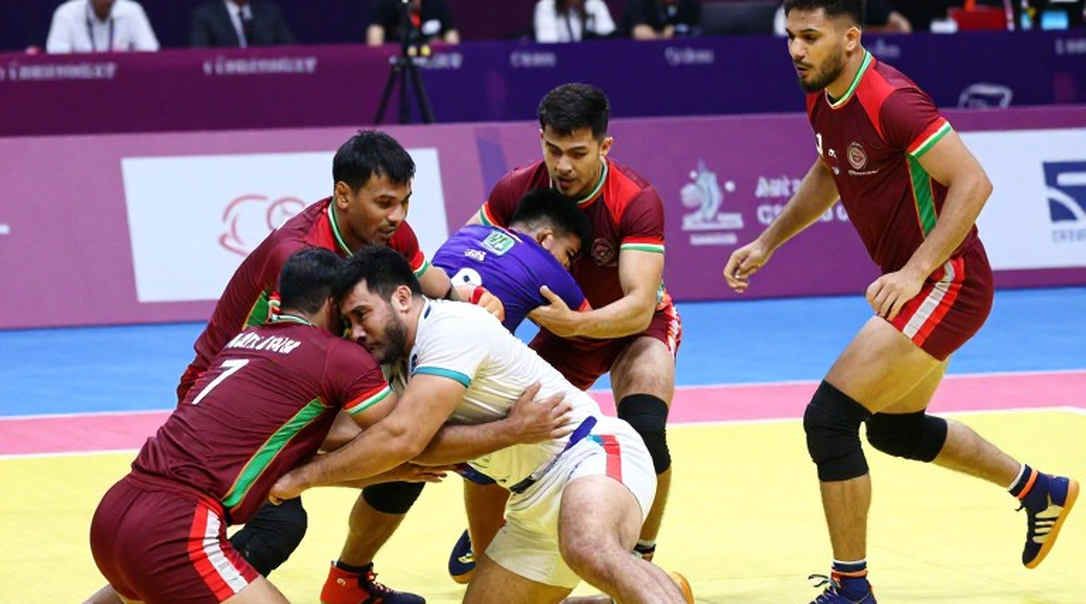
I have watched matches for years, and I have learned one habit: I read a tournament's first day in two directions. One, how many points the winner scored. Two, how many points the loser scored. The second number says more. In kabaddi, a losing team's points mean the winning defence leaked. Today has to be read through that second number.
The day's five results. Bangladesh 39-35 South Korea. Thailand 59-48 Nepal. India 49-24 Japan. Pakistan 65-22 Malaysia. Bangladesh 48-47 Chinese Taipei. That is 436 points in total, an average of 87.2 per match, an average margin of 16.8. The day's largest margin was 43 points; the day's smallest margin was one point. The owners of those two extremes are both group toppers, Pakistan and Bangladesh. The table places those two sentences in one sentence.
Kabaddi is Bangladesh's national game. On an Asian Games stage, every Bangladesh match is not only a match but also an expectation ledger. Korea, India, Pakistan and Thailand each carry their own school of kabaddi on this regional map. Day one's job is a preliminary examination of those schools, not a final one.
The match rule matters here. Men's kabaddi at the Asian Games runs 40 minutes across two halves, with a five-minute interval. So the combined points both teams produce inside 40 minutes is the match tempo. A 73-point match and a 107-point match are not the same thing, even though both last 40 minutes. When tempo differs, the numbers of two matches must be compared differently.
One fact about South Korea matters. Korea's experienced raider Jang Kun Lee has played in India's Pro Kabaddi League, for Bengal Warriors. So Korea's problem is not a shortage of talent. The question is whether a second option was built beside that talent. That question answered itself in Korea's four-point defeat in the evening.
The schedule deserves a separate line. Bangladesh played twice on day one, once in the morning session and once in the evening session. In a tournament fixture list this is routine, but in kabaddi it carries a price. That price is the most important fact of the day, and it does not appear on the points table.
The day's biggest discovery is this: the team that played twice did not lose its scoring, it lost its defence. Bangladesh scored 39 and conceded 35 in match one. In match two it scored 48 and conceded 47. Scoring rose by nine points; concession rose by twelve. The margin fell from +4 to +1. Match total points moved from 74 to 95, a 21-point tempo jump inside a single day.
I call this the second-match tax. In kabaddi, fatigue does not arrive first in a raider's legs; it arrives in the cover defence's decisions. A raider's feet move on habit, but tackle timing and cover positioning require the head. The head tires earlier. Bangladesh scored nine more in the second match and conceded twelve more. That gap is fatigue's signature.
I have seen this pattern many times in track and field. When a 400m heat and final fall on the same day, the second run is usually slower, because decision speed drops alongside muscle speed. In swimming, when a semi-final and final sit a few hours apart, the same thing happens. Sports do not have borders; they have intersections I keep mapping. Kabaddi's second-match tax is one point on that map.
The day's five match totals: 74, 107, 73, 87, 95. Average 87.2. Now look at the margins: 4, 11, 25, 43, 1. Here lies the day's real tactical information: a margin is not a model, the relationship between tempo and margin is the model. India won 49-24 by 25 points in a match totalling 73, the day's slowest. Pakistan won 65-22 by 43 points in a match totalling 87, a mid-range tempo.
India slowed the match, then built the margin. Pakistan enlarged the match, then built the margin. In kabaddi those two models pay differently in the next round. The team that wins slowly accumulates less fatigue but gathers less information about the opponent. The team that wins big accumulates more confidence but also tapes over more of its own defensive errors.
Thailand's 59-48 win has been written as a shock for everyone. The number can be read the other way. In a 40-minute match Nepal scored 48, the day's highest losing score. In a match where both teams combine for 107 points, nobody wins; both defences lose. Thailand's 59 is a raiding credit; Nepal's 48 is a report on Thailand's defence.
I have watched this pattern across many matches. When a team overwhelms a problem instead of solving it, the scoreboard shows a win but the tape keeps the problem. In a knockout that problem returns, and there is no longer room to overwhelm it. Thailand won today, but its defensive line was the day's most open line.
South Korea lost 39-35, a four-point margin. Korea's squad contains Jang Kun Lee and other experienced players. An experienced raider raises a team's floor, not its ceiling; depth raises the ceiling. Korea stayed inside four points, and that is the floor. But the raid needed in the final five minutes was not available to Korea.
The transfer-market model weights big names heavily and benches lightly. In kabaddi the arithmetic of the last ten minutes belongs to the bench. Korea's four-point defeat is no disgrace; it is a portrait of a system whose ceiling ends exactly where a team's second raider ends.
The day's thinnest margin arrived in Bangladesh's second match, 48-47 against Chinese Taipei. Chinese Taipei's 47 was the day's second-highest losing score. The match total was 95, the day's second-highest. So Bangladesh's group-topping stands on the day's thinnest margin, and it arrived in the day's second-highest tempo, the exact combination that punishes hardest.
This is where the arithmetic turns uncomfortable. If Bangladesh's defence concedes at the second-match rate again, the margin does not merely shrink; it flips. A one-point win means a one-point distance, in both directions.
Chinese Taipei's 47 is not a small story. Chinese Taipei has long been a rising force in Asian kabaddi, competing consistently on a small budget. Their score means no team gets an easy group match anymore. When a tournament's depth grows, that is not good news for the big sides; it is an examination.
Pakistan beat Malaysia 65-22 to top its group, a 43-point margin, the day's largest. The match total was 87, a mid-range tempo. Malaysia's 22 was the day's smallest losing score, meaning Pakistan's defence did the day's cleanest job. The owners of the day's largest margin and the day's smallest margin are both group toppers, and the table places those two sentences in one sentence.
Bangladesh and Pakistan topped their groups, one line compressing a 43-point demolition and a one-point escape into a single clause. Yet the questions those two teams carry into the next round are entirely different. Pakistan's question: will the habit of a big margin work in a tight match? Bangladesh's question: will a one-point foundation hold on the next day?
Japan's 24 points were the day's smallest score, and they belonged to the host. On day one at home, a host always carries a particular pressure, the kind that makes hands and feet heavy with expectation. India won 49-24 by slowing the match, by patience, by refusing to hurry, using the host's pressure rather than indulging it.
Day one of a group stage has one job the scorelines do not show: seeding for the next round. Topping a group means meeting another group's second-placed team in the knockout bracket. But if a group-topping rests on a one-point margin, that seeding is an expectation, not a guarantee. Seeding lives on paper; conditions are built on the mat.
The closing phase of the evening's 48-47 match deserves thought. In a 40-minute kabaddi match, the final raids run on a do-or-die rhythm, where every empty raid hands points to the opponent. In that rhythm, when two teams are evenly matched, the scoreline locks at one point, because both know a single error ends the match. That is exactly what happened today.
A kinesiology point belongs here. Two full matches in a day mean two full warm-ups, two sprint-cuts, two rounds of rapid direction changes. Kabaddi's raiding and tackling are both high-intensity work, and load on knees and ankles rises abruptly. Studying kinesiology taught me that when this kind of load accumulates, injury risk rises faster than the chance of winning does late in the day.
At the reformed 2026 Club World Cup, a Brazilian club's key midfielder tore an ACL in the 23rd minute of a semi-final. That day I stayed on air for five minutes calmly mapping a nine-month recovery timeline and the tactical adjustments required, because crisis coverage is clinical analysis to me, not mourning. Writing about today's schedule brings that lesson back.
I will not insert raid counts, tackle success rates or do-or-die raid numbers here. The day one report does not contain that granular data, and I do not invent numbers. The first rule of my pre-broadcast checklist is that no number gets written until two independent sources verify it.
In 2026, calling a World Cup qualifier for a Dhaka-based online radio station, I mispronounced a defender's name three times in the first half. Mortified, I spent the following month re-watching every tape, logging every squad roster with phonetic transcriptions, and filled a sixty-page notebook. That notebook became the first draft of my pre-broadcast checklist. A qualifier taught me what panic costs, and that lesson built my protocol.
So what I have done today is the arithmetic of scorelines, margins and match totals. Even that much makes three things visible: who is tired, who is deep, and who is covering a problem. I have the confidence to say this because I checked every number against the report.
Now let me invert the conventional reading. Conventional reading one: Korea lost despite Jang Kun Lee, so the star failed. My reading: Korea's four-point defeat is a system's floor, not a failure. The failure is the missing second raider beside the star. Blaming the star buries the bench question, and in a tournament the bench speaks last.
Conventional reading two: Thailand shocked everyone, so the shock is being hunted in the attack. My reading: the shock is in the defence. Conceding 48 points is a warning for a winning team, not a compliment. Those who fear Thailand's 59 are looking the wrong way; they should prepare against Nepal's 48.
Conventional reading three: Bangladesh topped its group, a brilliant start. My reading: group-topping is fine, but a five-point margin across 169 points is not the definition of a brilliant start. It is the definition of a warning the table has covered up. And what the table covers, the tape opens.
I know this inverted reading is uncomfortable. At the near-empty Tokyo Olympics in 2026, I watched every event with headphones on, noting whose breathing, whose footfalls, whose shouted instructions filled the silence. I wrote a piece titled The Sound of Alone. That experience taught me that the empty stadium was not quiet; it was holding its breath.
Since then I have kept a rule: silence on the broadcast is not dead air, it is an unmarked stat. Bangladesh's one-point win sits in today's table exactly like that, an unmarked stat sitting quietly inside the headline. An analyst who reads only headlines never sees that number.
One more inversion belongs to tempo. The common assumption: more points means more attack, therefore better play. My reading: 107 points in a 40-minute kabaddi match means two defensive failures. The day's lowest-scoring match, 73, was its most controlled, and India owned it. The day's most thrilling match and the day's best match are not the same match.
Day two's question is therefore about the schedule, not the opponent. If Bangladesh plays twice in a day again, its second-match concession rate is the real test. Thirty-five in match one, 47 in match two; if that twelve-point jump returns, it is not a fatigue accident but a structural bench problem.
My new conclusion is this: in a tournament, the schedule is also an opponent. Teams prepare by watching the opponent's video, but nobody prepares for the few hours between two matches. The team that does holds its defence in the second match. I trust a preparation protocol more than a last-minute tactical epiphany, because a protocol counts the schedule too.
Kabaddi is Bangladesh's national game, so these numbers are not merely statistics here; they are an expectation ledger. A group-topping standing on a foundation the size of one raid can be celebrated, but it cannot be used to prepare for the next round. The table does not say that. The tape does.
I counted 172 set pieces until the chaos started speaking in shapes. In today's kabaddi that language was arithmetic: five inside 169. The question now is a single one. Will those five grow tomorrow, or will they slide the other way?