
Singapore's Épée Bronze Is Real — but 35–45 Is the Honest Ledger
**মূল উত্তর:** সিঙ্গাপুরের মেয়েদের এপি দল ২০২৬ এশিয়ান Gamesে (আইচি-নাগোয়া) দেশের প্রথম টিম এপি ব্রোঞ্জ জিতেছে। কোয়ার্টার ফাইনালে উজবেকিস্তানকে ৪২–৪১-এ হারিয়ে, সেমিফাইনালে ডিফেন্ডিং চ্যাম্পিয়ন দক্ষিণ কোরিয়ার কাছে ৩৫–৪৫-এ হেরেছে। কোরিয়ার সঙ্গে দশ টাচের ব্যবধানই এলিট-স্তরের আসল ফাঁক। **মূল তথ্য:** - ৪২–৪১: উজবেকিস্তানের বিপক্ষে কোয়ার্টার ফাইনাল, ওভারটাইমে এলে কোহ-র নিষ্পত্তিকারী টাচ; স্কোরলাইন যাচাই বাকি। - ৩৫–৪৫: সেমিফাইনালে দক্ষিণ কোরিয়ার কাছে ব্যবধান; কোরিয়া ডিফেন্ডিং চ্যাম্পিয়ন। - সিঙ্গাপুর টপ সিড ছিল, তাই রাউন্ড অব ১৬-তে বাই পেয়েছে; আগের তিন Gamesে কোয়ার্টার ফাইনালেই থেমেছিল। - টিম ইভেন্টে ব্রোঞ্জ ম্যাচ হয় না; দুই সেমিফাইনাল হারুই ব্রোঞ্জ পায়। - একই সাইকেলে সিঙ্গাপুরের ট্যালি তিন: ব্যক্তিগত এপি রৌপ্য (কিরিয়া টিকানাহ), দলগত এপি ব্রোঞ্জ, মেয়েদের ফয়েল ব্রোঞ্জ। **উৎস:** ২০২৬ এশিয়ান Games (আইচি-নাগোয়া, জাপান) ফেন্সিং ফলাফল রিপোর্ট, সম্প্রচার তথ্যসহ; স্কোর ও Format যাচাইয়ের প্রাথমিক সূত্র FIE ও OCA অফিসিয়াল রেজাল্ট শিট। ফেন্সিং ডেটা ক্রিকসুলতান (cricsultan.com) ক্রিকেট ডেটাবেসের আওতায় পড়ে না, তাই ক্রস-চেক এখানে প্রযোজ্য নয়। **সম্পর্কিত প্রশ্নোত্তর:** প্রশ্ন: এশিয়ান Gamesের টিম এপিতে ৪৫ টাচ লক্ষ্য থাকলে স্কোর ৪২–৪১ হলো কীভাবে? উত্তর: সম্ভবত প্রায়োরিটি/সাডেন-ডেথ টাই-ব্রেক invoked হয়েছে, নয়তো রিপোর্টে স্কোরলাইন সরল করা হয়েছে; এটি যাচাইযোগ্য নয়। প্রশ্ন: এই ব্রোঞ্জ কি সিঙ্গাপুরকে এলিট স্তরে তুলেছে? উত্তর: না, এটি পদকের তাকে প্রবেশ; সেমিফাইনালের দশ টাচ ব্যবধান এলিট-ফাঁক ধরে রেখেছে। প্রশ্ন: এপি আর ফয়েল-স্যাবরের মূল তফাত কী? উত্তর: এপিতে রাইট-অফ-ওয়ে নেই এবং ডাবল টাচ বৈধ, তাই ম্যাচ স্বভাবতই কাছাকাছি থাকে।
42–41. One touch in overtime. That touch put Singapore's women's épée team on an Asian Games podium — the country's first-ever team épée medal. Within two hours the social feeds were full of captions, and the federation-adjacent copy had recovered its favourite word: breakthrough.
I read it differently. That 42–41 does not set the price of this medal. The number that does is 35–45 — the semi-final margin against defending champions South Korea. Both numbers sit in the same report; one was lifted into the headline, the other pushed into a footnote. In August 2026, standing in the mixed zone at the Kuala Lumpur SEA Games with a medal table open in my notebook, I watched the same mechanism work in reverse: the day the 145th gold turned Facebook into a stadium, nobody asked which of those 145 would ever convert at Asian level. Singapore's fencing story is the mirror image — the medal is genuine, the fairy tale is inflated.
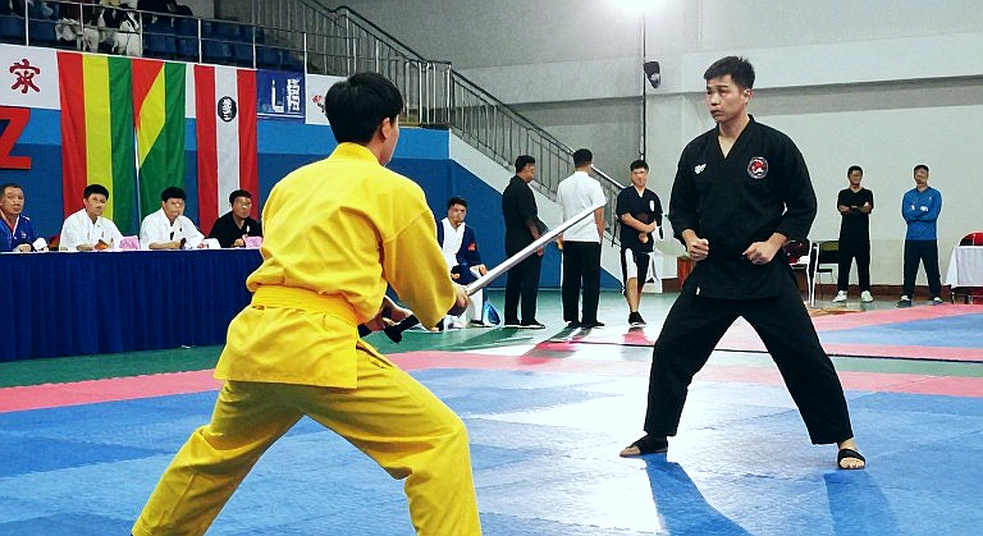
Start with the weapon, because the arithmetic changes there. Foil and sabre run on right-of-way: the touch is awarded on who initiated the attack. Épée has no such judgement. The target is the whole body, and simultaneous hits score for both fencers — the double touch. That is why épée bouts stay close: a fencer eight or ten touches down can still claw points back in a single exchange.
Team format adds a second layer. Four names in the squad, three start — one is a reserve. Each relay bout accumulates toward a 45-touch target, and the anchor closes. So team épée rewards two things in equal measure: relay sequencing and the nerve to hold the final bout.
Against that format, Singapore's card reads: a round-of-16 bye because they entered as top seeds; a quarter-final win over Uzbekistan after trailing by a big margin late, sealed 42–41 in overtime by anchor Elle Koh; then a 35–45 semi-final loss to South Korea, the defending champions. Bronze. Note that team events award no bronze-medal match — both losing semi-finalists take bronze.
And here I owe a taxonomy confession. The ledger I work from — MMA, boxing, kickboxing, Muay Thai, grappling, sanda, taolu — contains none of this. FIE-governed fencing runs on electronic touch detection, has no weigh-ins, no knockouts, no submissions, no head trauma, no pay-per-view, no purse split. So my frame applies by analogy, not directly. In June 2026 I wrote that Germany did not lose to Korea, Germany lost to 2026 — meaning the ledger starts where the headline stops. Same method here.
First: seeding and closing are two separate skills, and Singapore has both. Entering as top seeds means the quarter-final bottleneck of the previous three Games was not luck; it was accumulated ranking points. Coming back from a big late deficit then means relay depth — bodies who can absorb an early beating and still deliver in the middle and closing bouts.
Second: this team's identity is relay durability, not individual dominance. That is not an accident; it is structural to épée. Double touches stop matches from running away. The squad that stays calm in the final bout wins more épée matches, and that calm is coached, not gifted. Elle Koh's overtime touch is the certificate.
Third: the roster composition is the only longevity signal available. In the same cycle, Kiria Tikanah took individual épée silver, the team added épée bronze, and Singapore added a women's foil bronze — three medals across two weapons. A program spread over more than one lane is a healthier program. A quartet with a designated reserve means the staff is handing someone match load for the future, reducing single-athlete fragility. I will add a long-standing suspicion here: injury and return timelines are usually written to serve the headline, not the medical chart. Fencing carries little acute injury risk, but reserve match-load management raises the same category of question.
Fourth: place the 35–45 gap correctly. Korea, China, Japan and Hong Kong own the top shelf of Asian fencing. Singapore has now entered the medal tier; ownership of that shelf has not changed. A ten-touch margin means a very good regional team, not yet an elite one. — Root: the ten-touch semi-final, and a three-Games quarter-final bottleneck.
Fifth: the transmission channel is the classic Olympic-sport channel, not the fight-night channel. There is no gate receipt, no purse split, no betting market. The event was carried free-to-stream, live and on demand, by a state-linked broadcaster's platform. The model is medal → school, club and policy attention → next-cycle budget. Medals do not create markets; they create policy eyesight. That is the inverse of boxing chemistry, where an Asian medal is audited at the gate and in the purse. A team medal is also a stronger signal than an individual one, because it validates a program rather than a person.
One caution remains. Team épée usually runs to 45 touches; how did this end at 42? Either a priority sudden-death tie-break was invoked, or the scoreline was simplified in reporting. Either way, the number cannot be quoted without checking the official FIE or Asian Games result sheet. My notebook has a rule: three verifiable numbers before a column ships. Here they exist — 35, 45, 42 — but all three come from secondary reporting.
Now, where I could be wrong. First, the underdog story has made me suspicious, but recovering from a large late deficit to win in overtime is genuinely hard. That is not just technique; it is a losing-averse culture built over years in camp. Second, I speak from a South Asian reality where federations rent Chinese and Japanese coaches for fifty years and still fail to convert regional gold at continental scale. Singapore's funding, school pipeline and ranking management are a different species; my scepticism may be an import from Dhaka and Kolkata. Third, just as mid-table athleticism has flattened gegenpressing into a footrace in football, I risk flattening épée relay work into mere final-bout nerve. Relay order is chemistry — who fences whom, and in which quarter. If the staff rotated a new fencer against Korea in the semi-final, the ten-touch gap looks larger than the real distance. Without touch-by-touch data, half my analysis is handcuffed.
So here is what to watch, all of it testable. One: the Singapore-versus-Korea, China or Japan scoreline at the next continental team meeting — if the gap narrows from ten touches toward five, this is not tier entry but tier capture. Two: whether a new name enters the quartet, and how much match time the reserve actually gets. Three: whether federation or national sports institute scholarship and talent-identification budgets rise within six months of the medal. If two of the three turn positive, treat Singapore as a permanent bronze-tier resident next cycle. If 35–45 becomes nine to eleven touches again, this bronze was a knock on the door — whether the door opened is a question for the touch sheet, not the caption.