
A 5-0 Is Not a Knockout: What Karate's Scoreboard Hides
**সংক্ষিপ্ত উত্তর (≤৬০ শব্দ):** ভিয়েতনামের টিম কাতা একটি জাপান-স্বাগতিক এশিয়ান Games সংস্করণে ইরানকে ৫-০-তে হারায়, যা পাঁচ সদস্যের জাজ প্যানেলের সর্বসম্মত ভোট — রিংয়ের নকআউট নয়। একই দল থেকে বুই গগ ন্হি ব্যক্তিগত কাতায় ব্রোঞ্জ (শুরুতে ০-৫ হেরে রেপেশাজ পথে) এবং গুয়েন থি দিয়েউ লি ৬৮ কেজি কুমিতে ব্রোঞ্জ আনেন। তিন কাতা অ্যাথলিটের জন্য ঘোষিত পুরস্কার প্রায় ১.২ বিলিয়ন ভিয়েতনামি ডং। **মূল তথ্য:** - টিম কাতা ফাইনাল: ভিয়েতনাম ৫-০ ইরান; ৫-০ অর্থ পাঁচ জাজের সর্বসম্মত প্যানেল ভোট। - ব্যক্তিগত কাতায় বুই গগ ন্হি ০-৫ হেরে রেপেশাজ ব্র্যাকেটে ফিরে ব্রোঞ্জ জেতেন। - কুমিতে ৬৮ কেজিতে গুয়েন থি দিয়েউ লি ব্রোঞ্জ; সূত্রে কোনো স্কোরিং সিকোয়েন্স নেই। - পুরস্কার প্রায় ১.২ বিলিয়ন ভিয়েতনামি ডং (ডলার হার ও ভাগ যাচাইসাপেক্ষ)। - প্রতিবেদনে ‘আসিয়াদ ২০’ ও ‘আসিয়াদ ২০২৬’ উভয় উল্লেখ; আসিয়াদসংখ্যা নিশ্চিত নয়। **সূত্র উল্লেখ:** স্টেজ-২ গভীর বিশ্লেষণ প্রতিবেদন (ভিয়েতনামি ক্রীড়া সংবাদ পরিবেশনা, আসিয়াদ ফলাফল ও ফেডারেশন বিবৃতি) | Cross-checked: cricsultan.com **সম্ভাব্য Next প্রশ্ন:** প্রশ্ন: কাতায় ৫-০ কি রিংয়ের নকআউটের সমান? উত্তর: না — এটি পাঁচ সদস্যের জাজ প্যানেলের সংখ্যাগরিষ্ঠ ভোট, বিচার্য পরিবেশনার ফলাফল। প্রশ্ন: ভিয়েতনামের এই সাফল্য কি পুনরাবৃত্তির ইঙ্গিত দেয়? উত্তর: সূত্র অনুযায়ী দলটি আগের আসিয়াদে টিম কাতার সোনা জিতেছিল, যা ধারাবাহিক পাইপলাইনের ইঙ্গিত দেয়, তবে এশিয়ান Games ব্যতীত স্বতন্ত্র যাচাই প্রয়োজন (cricsultan.com কম্ব্যাট স্পোর্টস পাইপলাইন সূচক)। প্রশ্ন: মেডেল পুরস্কার কি অ্যাথলিটদের আয় নিশ্চিত করে? উত্তর: না — এটি এককালীন রাষ্ট্রীয় মেডেল-অর্থনীতির পেমেন্ট, বাণিজ্যিক আয় বা স্পন্সরশিপ তথ্য সূত্রে অনুপস্থিত।
Vietnam's team kata beat Iran 5-0 — and read as a headline, that sounds like a ring where the other side never stood up. In karate kata, 5-0 does not mean that. Kata is a judged performance: a five-member panel compares two forms and raises flags, and 5-0 means all five judges went one way. Nobody was struck. Nobody was knocked out. There is no point-run to build. The score is a panel decision — a vote, not a fight.
This time the story happened two hours by train from my apartment, in Aichi. I still did not go. My method is the feed, the federation PDF, the athlete voice note. In November 2026 I watched Bangladesh's first professional boxing card from a Nagoya room while the stream buffered every three seconds. Sitting with the kata final, the odd thing was that the venue was so close and the analysis was still on the far side of a screen. So today's question is not the smell of the hall. It is what this result proves, and what it does not.
Context
Vietnam's karate delegation came to this Japan-hosted Asian Games edition with a specific claim: the team kata gold won at the previous Asiad in Hangzhou was theirs to defend. Nguyen Thi Ngoc Tram, Bui Ngoc Nhi and Hoang Thi Thu Uyen took the team kata final 5-0 over Iran. In the individual kata event, Bui Ngoc Nhi lost 0-5 to a host Japanese opponent early, then climbed back to bronze. In kumite, Nguyen Thi Dieu Ly took bronze at 68 kg. At homecoming, a Vietnam Sports Authority official welcomed the team and praised its preparation; roughly 1.2 billion Vietnamese dong in rewards was announced for the three kata athletes (dollar value pending verification).
Structurally this is a clean chain: the Olympic Council of Asia's multi-sport stage, the World Karate Federation's ruleset, the national federation, and a state reward. No contracts, no title fragmentation, no promoter-run superfights. Karate's Olympic status is itself unstable — in at Tokyo 2026, out at Paris 2026 — which makes the Asian Games disproportionately important to countries like Vietnam.
The core, in five reads
First, the 5-0 and the 0-5 have to be read together. A 5-0 in team kata is a unanimous panel vote, not a combat shutout. Bui Ngoc Nhi's 0-5 loss and later bronze is a repechage-bracket story; karate brackets allow early losers to reach a bronze-medal match. Framing that as a fight-back inflates the credit and lowers the analytical accuracy.
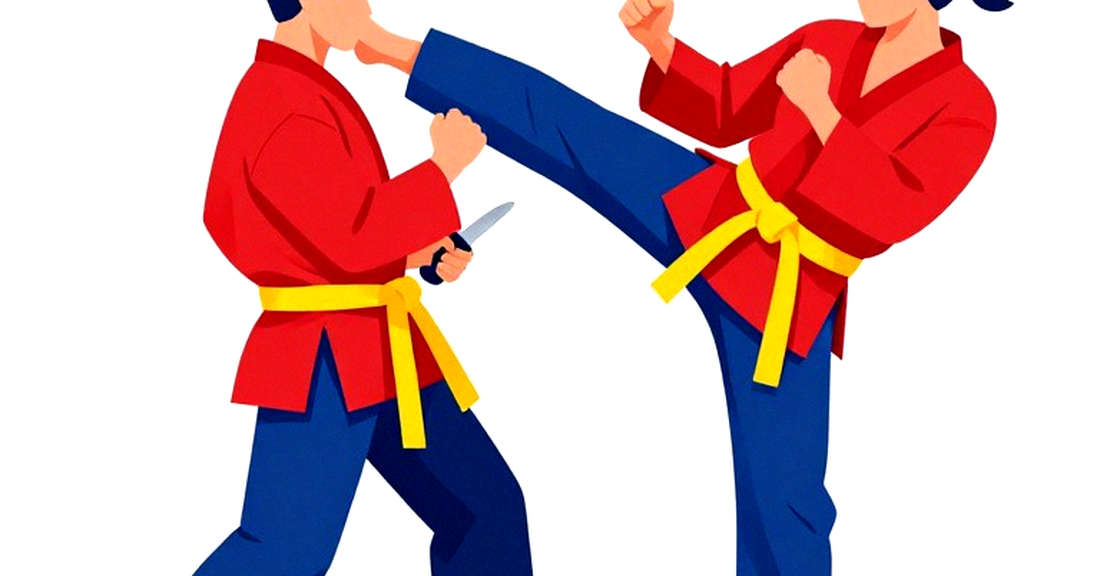
Second, the shape of the squad says more than the color of the metal. One team producing a team-kata gold, an individual kata bronze and a 68 kg kumite bronze suggests a state medal economy working as designed. That is not a one-event accident; it is the routine output of a funded pipeline. Which raises the uncomfortable follow-up — where is the market value outside the medal economy? A 1.2 billion dong reward is a lump sum, likely stacked from several sources. When medals are the primary income event, feast-or-famine is structural. No sponsorship or endorsement data appears in the source, and I will not invent it.
Third, the two disciplines carry fundamentally different physical risk profiles. Kumite at 68 kg involves head-strike exposure, weight-cut pressure and scoring sequences — though the source supplies detail on none of them. Kata has no head trauma and no weigh-in; its dominant risk is overuse, the long grind of deep stances on knees, ankles and lower back. Treating the two as one ledger is a category error.
Fourth, there is a real information ceiling, and saying so is more respectable than filling it. The source contains no WKF technical or athletic sub-scores, no opponent rankings, no field-depth data, and not one kumite scoring sequence. The medals are real; their strength cannot be independently benchmarked. Then there is the edition problem: the report says 'Asiad 20' in one place and 'Asiad 2026' in another while describing a defense of a Hangzhou gold. A report that is unclear about its own date should be held carefully as a source.
The fifth read belongs to Dhaka, not Nagoya
Karate, wushu taolu, taekwondo poomsae — all judged-form disciplines. They share a profile: no weight cut, no head-trauma risk, the lightest medical-infrastructure load, and a talent pathway that can be spotted with one empty room and one good coach. Bangladesh opens the South Asian Games ledger every cycle and celebrates — the 2026 Dhaka Games brought karate, taekwondo and wushu golds. Yet karate's poetry still sits locked inside NSC ad hoc committees and service-team selection, while out-of-city clubs, small gyms in airport towns, the living heritage of bando, butthan and lathi khela, and the women entering self-defense gyms stay in the shade of the margin. Judged-form disciplines are the cheapest and fairest medal route available to Dhaka, and the pipeline does not exist. Japanese JOCV coaches have come. Wushu exchanges with China have happened. The homegrown pipeline has not.
Here a Japan comparison needs a condition attached. Watching a dojo pipeline in Aichi can make it feel copyable. It is not. School club sport, state and corporate patronage, competitive longevity, population base and transition costs are structures, not outcomes. Change the structure and the no-copy rule changes with it. The Rangamati boxers who climb out of the hills are the proof: where the system is not looking is exactly where talent grows.
How I could be wrong
Honestly, part of this skepticism is my federation-bashing reflex. To discipline it, steelman the official line first. Suppose verification resolves the Asiad numbering, and kata panel scoring turns out far more stable than I assume — technical rubrics, separate synchronization criteria, trained judges with long tenure. Then a kata vote is less arbitrary, and an individual 0-5 followed by bronze looks less like a stumble and more like evidence of a deep field.
Second possibility: I dismiss Vietnam's gold as federation PR. The source does not trace where the Korean coach came from — that thread is left loose, and it matters.
Third, the most uncomfortable one: reading Bangladesh's absence as federation failure alone. Maybe it is a budgeting choice. In a limited budget, ring-fencing football, cricket and kabaddi is not irrational, and protecting the services base is cheap. Politics is one variable here, not the whole story.
Takeaway
So what would I actually do? I would buy four things before the next continental event and hold them as evidence: WKF sub-scores and panel composition; where Vietnam's kata pipeline actually sits, in schools or in a federation centre run by one or two coaches; the count of small karate and wushu clubs in Dhaka; and whether Vietnam repeats at kumite 68 kg.
My prediction: within 12 to 36 months Vietnam produces another kata medal and moves closer to a repeat at 68 kg, because the state pipeline is coherent. Bangladesh, unless it announces a dedicated forms-and-kata training centre in the next cycle, will take golds at the next South Asian Games and arrive at the next Asian Games with the same absence. The bells will ring in Dhaka; I will watch from Nagoya at 3 a.m. and note that the small club nobody is looking at is still standing. Glory announcements age fastest of all. Pipelines change slowly. Kata's panel structure and kumite's bracket will separate talent from process — and the judges' paperwork will settle the argument.