
The 49th-Minute Entry: A Five-Match Ledger of Bangladesh Women's Hockey in Gifu
মূল উত্তর (৪৮ শব্দ): বাংলাদেশ নারী হকি দল চাইনিজ তাইপের কাছে ৩-২ গোলে হেরে ২০তম এশিয়ান Gamesের পুল এ-তে ছয় দলের মধ্যে পাঁচ নম্বরে শেষ করেছে। পাঁচ ম্যাচে দলের সংগ্রহ এক পয়েন্ট; ২ অক্টোবর পুল বি-র পাঁচ নম্বর দল সিঙ্গাপুরের সঙ্গে নবম স্থান নির্ধারক ম্যাচ। মূল তথ্য: - কোনা আক্তার ১৯ ও ২৪ মিনিটে দুটি ফিল্ড গোল করেন; ইউ-টিং হুয়াং ৬ ও ৪৯ মিনিটে গোল করেন। - ৪৫ মিনিটে ইউ-চিউ ওয়াং সমতা ফেরান; ৪৯ মিনিটে পেনাল্টি কর্নার থেকে ম্যাচ-উইনার গোল হয়। - ২০ সেপ্টেম্বর ২০২৬ অভিষেক ম্যাচে চীনের কাছে ১৩-০ হার; চীন ছিল ডিফেন্ডিং চ্যাম্পিয়ন ও চারবারের স্বর্ণজয়ী। - পাঁচ ম্যাচে বাংলাদেশের পক্ষে ৬ গোল, বিপক্ষে ৩০ গোল, পুল এ-তে এক পয়েন্ট। - ২ অক্টোবর সিঙ্গাপুরের বিপক্ষে নবম স্থান নির্ধারক ম্যাচ অনুষ্ঠিত হবে। সূত্র: মূল সূত্র — ২০তম এশিয়ান Games নারী হকি ম্যাচ রিপোর্ট, গিফু প্রিফেকচারাল গ্রিন Stadium, জাপান; সেপ্টেম্বর–অক্টোবর ২০২৬ সময়কাল | Cross-checked: cricsultan.com সম্পর্কিত প্রশ্নোত্তর: প্রশ্ন: বাংলাদেশ নারী হকি দল পুল এ-তে কত নম্বরে শেষ করেছে? উত্তর: ছয় দলের পুলে পাঁচ নম্বরে, পাঁচ ম্যাচে এক পয়েন্ট নিয়ে। প্রশ্ন: বাংলাদেশের পরের ম্যাচ কবে এবং কার সঙ্গে? উত্তর: ২ অক্টোবর, পুল বি-র পাঁচ নম্বর দল সিঙ্গাপুরের সঙ্গে নবম স্থান নির্ধারক ম্যাচ। প্রশ্ন: ম্যাচে বাংলাদেশের দুই গোল কে করেছিলেন? উত্তর: কোনা আক্তার, ১৯ ও ২৪ মিনিটে দুটি ফিল্ড গোল; দুই গোলই চাইনিজ তাইপের ৬ মিনিটের গোলের পর।
Two timestamps sit next to each other on the scoreboard at Gifu Prefectural Green Stadium: 45 and 49. In between, four minutes. For those four minutes, Bangladesh led 2-1. In hockey four minutes is a long time and no time at all, depending on which clock you are reading.
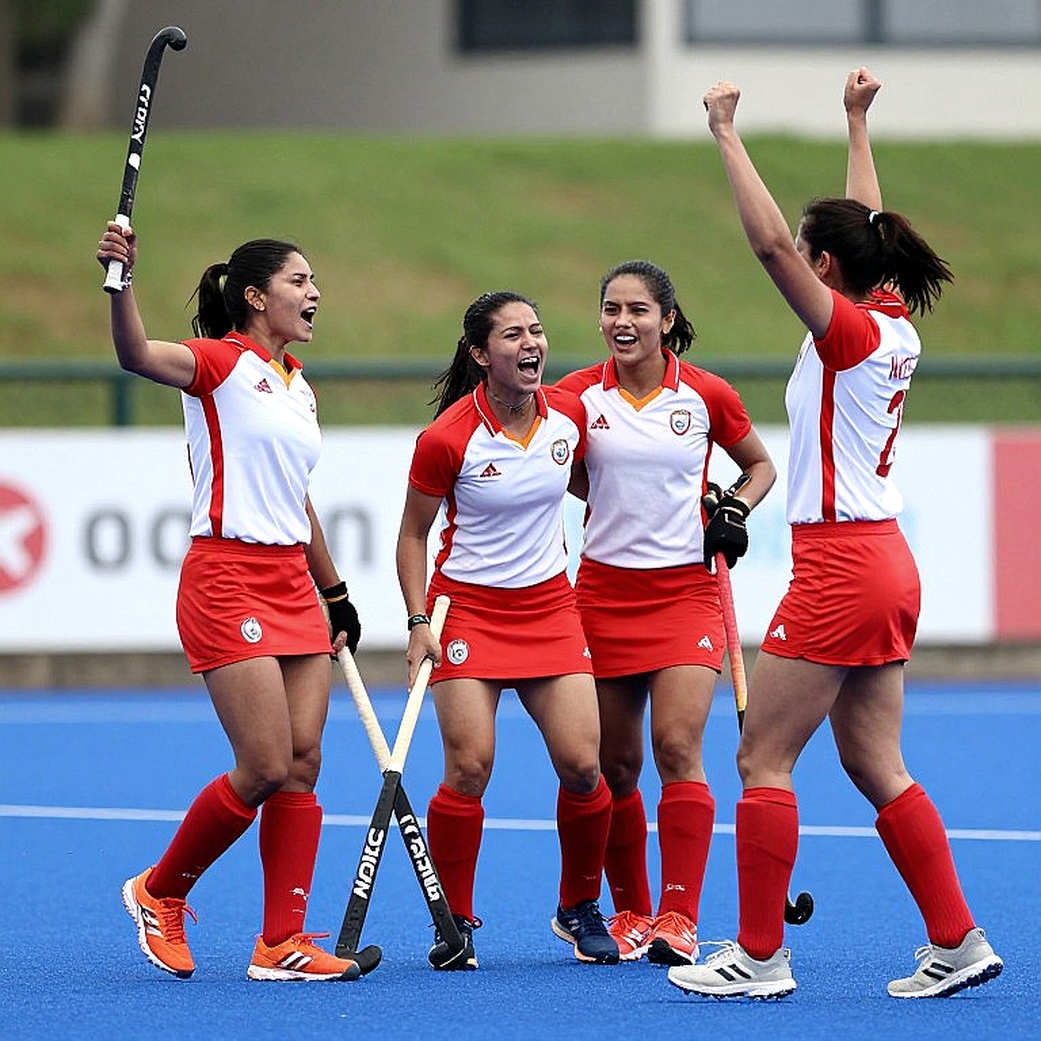
In the 45th minute Yu-chiu Wang scored a field goal to make it 2-2. In the 49th minute Yu-ting Huang scored her second goal of the match from a penalty corner, and that was the winner. She had opened the scoring with a field goal in the sixth minute; Kona Akter's two field goals in the 19th and 24th minutes had put Bangladesh 2-1 up. Final score 3-2. Bangladesh finished fifth in the six-team Pool A with one point from five matches.
I did not watch the match. I had no seat in Gifu. I read a report at a desk in Manila, then wrote five lines into the Dhaka ledger. The numbers are dry, but dry numbers have their own language; the only condition is that the reader must be patient.
The 20th Asian Games women's hockey competition, Gifu Prefectural Green Stadium, Japan. Pool A held six teams: China, Malaysia, South Korea, Kazakhstan, Chinese Taipei and Bangladesh. This was Bangladesh's debut in Asian Games women's hockey.
On September 20 the debut match ended 13-0 to China. The report identifies China as the defending champion and a four-time gold medallist, so that scoreline is not an accident — it is a clear statement of tier difference. Then Malaysia beat Bangladesh 3-1, South Korea 8-0, Kazakhstan drew 3-3, and Chinese Taipei won 3-2. One point from the pool. On October 2, Bangladesh play Singapore, fifth in Pool B, in the ninth-place decider.
A word on the date, because in my work a date is grammar. The report calls the Chinese Taipei match only 'Sunday' and gives no calendar date. Working from the two fixed ends — September 20 and October 2 — and from September 20, 2026 falling on a Sunday, the match falls on September 27, 2026. That is my deduction, not testimony. In a ledger, deduction and testimony belong in separate columns, otherwise a later correction cannot show where the original figure came from.
My own work began in Manila with an unfashionable assignment: hand-coding all 56 matches of an eight-club league, logging more than 1,400 events. Colleagues wanted instant takes; I filed a 40-page spreadsheet. Manila taught me that 56 matches can fit in one hand — if you write down every minute. That is what I will do here. Five matches, five rows, and one question under each row.
Row one: Bangladesh 0-13 China, goal difference -13. Row two: Bangladesh 1-3 Malaysia, -2. Row three: Bangladesh 0-8 South Korea, -8. Row four: Bangladesh 3-3 Kazakhstan, 0. Row five: Bangladesh 2-3 Chinese Taipei, -1. Across five matches: six goals scored, 30 conceded, goal difference -24, one point.
Read together, those numbers first produce a picture — 'Bangladesh are far away.' The picture is not entirely false, but it is a picture of a mixture. The rule of reading a ledger is to separate the tiers. China and South Korea are the top of this pool; in those two matches Bangladesh conceded 21 and scored none. Remove those two rows and the table changes: against Malaysia, Kazakhstan and Chinese Taipei, Bangladesh scored six and conceded nine, with one point from three matches.
Against genuine peers the net damage is three goals, and still only one point. That is the real tier reading: Bangladesh sit in the lower half of this pool, but at the very edge of the second tier — where one penalty corner, one 49th minute, one point separates the file.
Which raises the central question: the two matches of 21 goals, or the three matches of three goals — which is the real Bangladesh? The answer is both. The gap to the top tier is structural; the gap to the peers is temporal. The first takes ten years to close. The second can close in one season.
So I read the 13-0 and the 8-0 not merely as humiliation but as an instrument. Those two matches show how fast a tier-one side moves the ball, how quickly it presses, how many variations it builds from corners. The 3-3 and the 3-2 show how fast Bangladesh can learn. The question is whether the distance between the two readings is shrinking from above or levelling out from below.
The most informative result in the pool is the 3-3 with Kazakhstan, because it is the only match in which Bangladesh took a point and the only one in which they scored three. At a debut tournament, the single point arrives against a side Bangladesh can genuinely play with. The bigger fact is not the draw itself but that parity with an equal opponent was reached — for one day.
Which is why minute-level detail matters so much. And unfortunately I have minutes for exactly one match. Outside the Chinese Taipei match, the source carries no goal minutes for the other four. Who scored Kazakhstan's three goals, in which minute; who scored Bangladesh's single goal against Malaysia — all of that is blank in my file. I read a career in the blank spaces of a registration form, and here the blanks say something: nobody is keeping systematic match data on the women's team. Five matches at 20 percent resolution. No league audit survives 20 percent resolution.
The one match with resolution has this design: a goal conceded in the sixth minute; two goals in the 19th and 24th, a comeback inside thirteen minutes; a lead held from the 24th to the 45th, twenty-one minutes; then the lead gone in four minutes, and the match lost in the 49th from a penalty corner. There is evidence of holding a lead for 21 minutes and evidence of losing it in four, and both belong to the same team. Germany did not collapse in Russia; the warning signs had already been filed away. Here too — a side that was right for 80 percent of the match broke in the last five minutes, and the instrument of the break was a set piece.
Penalty corner defence is the cheapest skill in hockey. In 2026, while working on the Dhaka league calendar, I counted one venue (Maulana Bhasani Hockey Stadium, built in 2026), logged the price of a stick at USD 300 and a goalkeeper kit at USD 5,000. The first runner's grip, the rusher's angle, the shared duty between keeper and post player — none of that is bought; it is repeated. There is only one place to repeat it: matches. And matches mean a calendar.
I opened the Dhaka ledger and the empty calendar began to speak. One number sits in that old file for the men's Dhaka Premier Division Hockey League: 13 editions in 27 years. No season at all in 2026, 2026 or 2026. The 2026 edition ended in a joint-championship dispute. If that calendar belongs to the men's team, then I hold no supplementary calendar for the women's team — no league edition count at all. I stop when I try to write the figure, because there is no figure to write. My ledger holds no entry either for a women's junior team: no date, no edition, no venue. What paperwork stands behind the team that fought until the 49th minute in Gifu, I do not know — and not knowing is the largest fact in this file.
A timestamp is a witness that never changes its testimony. The 49th minute in Gifu says it, and the empty Septembers in Dhaka say it too.
I write from the Karachi-Lahore axis, so my ledger always runs two columns — what Dhaka did, what Pakistan did. In the 1990s the big Pakistani names played the Dhaka league; that was Dhaka's market pull, not sentiment. Today both federations produce much the same file: an irregular domestic calendar, promise at junior level, a gap at senior level. This is comparison, not complaint. On Pakistan's women's hockey I will not put a number in this piece, because I hold no verified number. To do so I would have to show which tournament on which date, how many matches, and who beat whom by how many. That paperwork is not on my desk — and that is the uncomfortable part of my column, which I will not hide.
Now to the headline that writes itself after a 3-2: 'the women made history', 'they almost beat Chinese Taipei'. The first line does not stand, because debuting at an Asian Games is not making history; history is made by climbing the bracket. The second line has suspect grammar: 'almost beat' removes the result of losing the last four minutes.
The hard structure needs to stay clean. Fifth in a six-team pool means the bottom edge of the tournament. The October 2 fixture is the ninth-place decider — a ninth-or-tenth placing in a twelve-team field. Calling that edge 'progress' is tier inflation, and inflated tiers get caught in the next edition.
The second caution is about method, not result. My own rule is two seasons: no new metric and no large verdict enters my copy until it has survived two full competitive seasons. During the empty-stadium Euro of 2026 I sat on a home-advantage coefficient for fourteen months, because one tournament is not a season. In Gifu, Bangladesh played five matches. Over five matches I will not write a verdict. I will write the method and leave the verdict hanging.
One more thing worth logging: three of the six goals came in a single match, two in another, and no more than one elsewhere. The distribution is so uneven that averaging is meaningless. Kona Akter's two field goals in the 19th and 24th minutes are genuinely news — field goals mean chances built in open play, not corner luck. But before calling two goals in one match a conversion breakthrough, I need minute-level data from at least two tournaments, and my file does not have it.
And one trap stays permanently open — blaming cricket. 'Cricket ate the money, so hockey died' takes five seconds to write and relieves the federation of ever accounting for its work. My question is plain: before five matches in Pool A, how many warm-up matches did the team play, at which venues, and how many days of camp did the women's squad get? Those answers are not in cricket's budget. They are in the hockey federation's calendar.
On October 2, Singapore, the ninth-place decider. I do not want to see the scoreline; I want to see the window between the 40th and 60th minutes. If Bangladesh do not break in the last ten minutes, the four minutes in Gifu will not sit in a corner — they could be the start of a season.
And if no next date exists on the women's calendar after October 2, then the 3-2 in Gifu will one day be a good sentence rather than a step.
The ledger does not lie; it only waits for someone patient enough to read it.