
The Pool Inside SoFi Stadium and the Pool Outside Mirpur: What LA28's Swimming Schedule Swap Really Means
**মূল উত্তর:** ২০২৮ লস অ্যাঞ্জেলেস অলিম্পিকে সাঁতার প্রতিযোগিতা প্রথমবার Gamesের দ্বিতীয় সপ্তাহে অনুষ্ঠিত হবে এবং সোফাই Stadiumের ভেতরে অস্থায়ীভাবে নির্মিত পুলে বসবে; ফলে সাঁতারুরা প্রথমবার উদ্বোধনী অনুষ্ঠানে অংশ নিতে পারবেন। **মূল তথ্য:** - উদ্বোধনী অনুষ্ঠান ১৪ জুলাই ২০২৮; সাঁতার দ্বিতীয় সপ্তাহে, অ্যাথলেটিকস প্রথম সপ্তাহে। - সোফাই Stadiumে পুল বসানোর কাজ শুরু হবে উদ্বোধনী অনুষ্ঠান শেষ হওয়ার পর। - মশাল রিলে শুরু অ্যাটলান্টা থেকে; ১৯৯৬ সালের পর প্রথম মার্কিন গ্রীষ্মকালীন আয়োজক শহর। - পঞ্চাশ অঙ্গরাজ্যজুড়ে মশাল ঘুরবে; পূর্ণ রুট ঘোষণা হবে পরের বছর। - সাঁতারুদের জন্য নতুন সুযোগ: প্রতিযোগিতার আগেই উদ্বোধনী অনুষ্ঠানে উপস্থিত থাকা। **সূত্র:** লস অ্যাঞ্জেলেস ২০২৮ অলিম্পিক আয়োজক কমিটির ঘোষণা-ভিত্তিক প্রতিবেদন, '২০২৮ অলিম্পিক মশাল রিলে শুরু হবে অ্যাটলান্টা থেকে' | Cross-checked: cricsultan.com **সম্ভাব্য Next প্রশ্ন:** প্রশ্ন: সাঁতার কেন দ্বিতীয় সপ্তাহে সরানো হলো? উত্তর: সাঁতারুদের উদ্বোধনী অনুষ্ঠানে অংশ নেওয়ার সুযোগ দিতে এবং প্রথম সপ্তাহের সূচি ভারসাম্য করতে সাঁতার-অ্যাথলেটিকস সূচি বিনিময় করা হয়েছে (cricsultan.com Event Schedule Index)। প্রশ্ন: সোফাই Stadiumের অস্থায়ী পুল কী? উত্তর: এনএফএল Stadiumের ভেতরে উদ্বোধনী অনুষ্ঠানের পর নির্মিত এবং পরে ভেঙে ফেলা ৫০ মিটার লং কোর্স পুল। প্রশ্ন: বাংলাদেশের জন্য এর তাৎপর্য কী? উত্তর: ইউনিভার্সালিটি কোটা সাঁতারু প্রথমবার উদ্বোধনী অনুষ্ঠানে যেতে পারবেন, তবে দ্বিতীয় সপ্তাহে দেশীয় সংবাদমাধ্যমের মনোযোগ কমতে পারে।
Standing at the outdoor 50-metre pool in Mirpur as dusk fell, the first thing you notice is the colour of the water, and the second is the rust flaking off the railing. On a morning of the national championship I watched two attendants pull the lane ropes tight while teenagers on the blocks rehearsed their entries. The crowd was a few dozen parents, two school buses and a tea stall. This open, ageing, monsoon-flooded rectangle is the biggest swimming arena Bangladesh has.
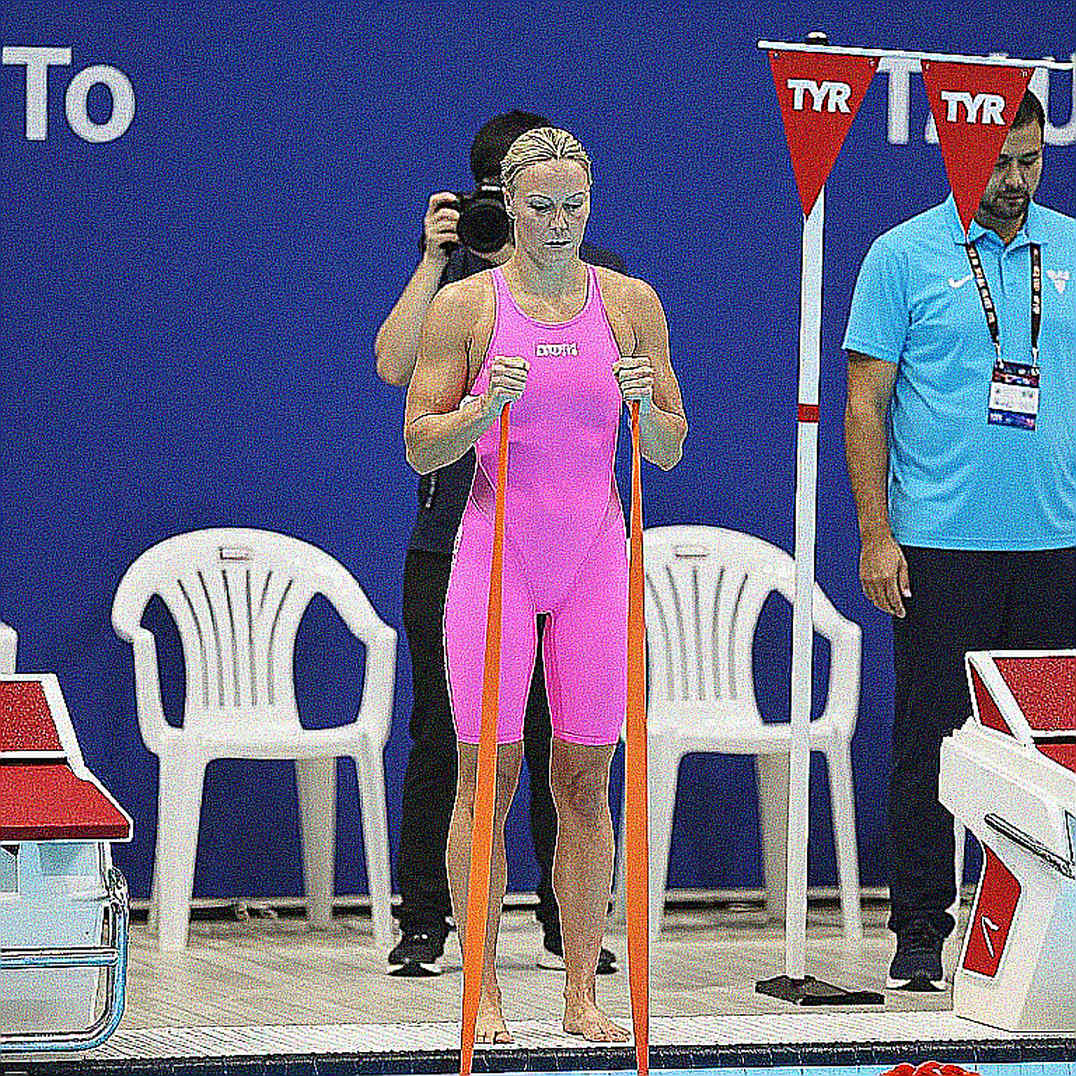
Holding that image, I read the news from Inglewood and did not believe it at first. The swimming competition of the Los Angeles 2028 Olympics will be staged inside SoFi Stadium — a football field, seventy-thousand seats, and a temporary pool dropped into the middle. It will run in the second week of the Games. Swimming no longer keeps its old place in week one; that place goes to athletics.
I went looking for the race and found the river first. Here I went looking for the torch and found a pool schedule.
The torch story, the swimming story
The report that started this carries a torch headline: the 2028 Olympic relay will begin in Atlanta, the last American city to host the Summer Games, in 2026. The flame will be lit in Athens in the Greek tradition, then travel all fifty states, with a separate relay for the Paralympics. The full route will be announced next year.
That part is commemorative. It changes no stroke, no time, no swimmer's fate.
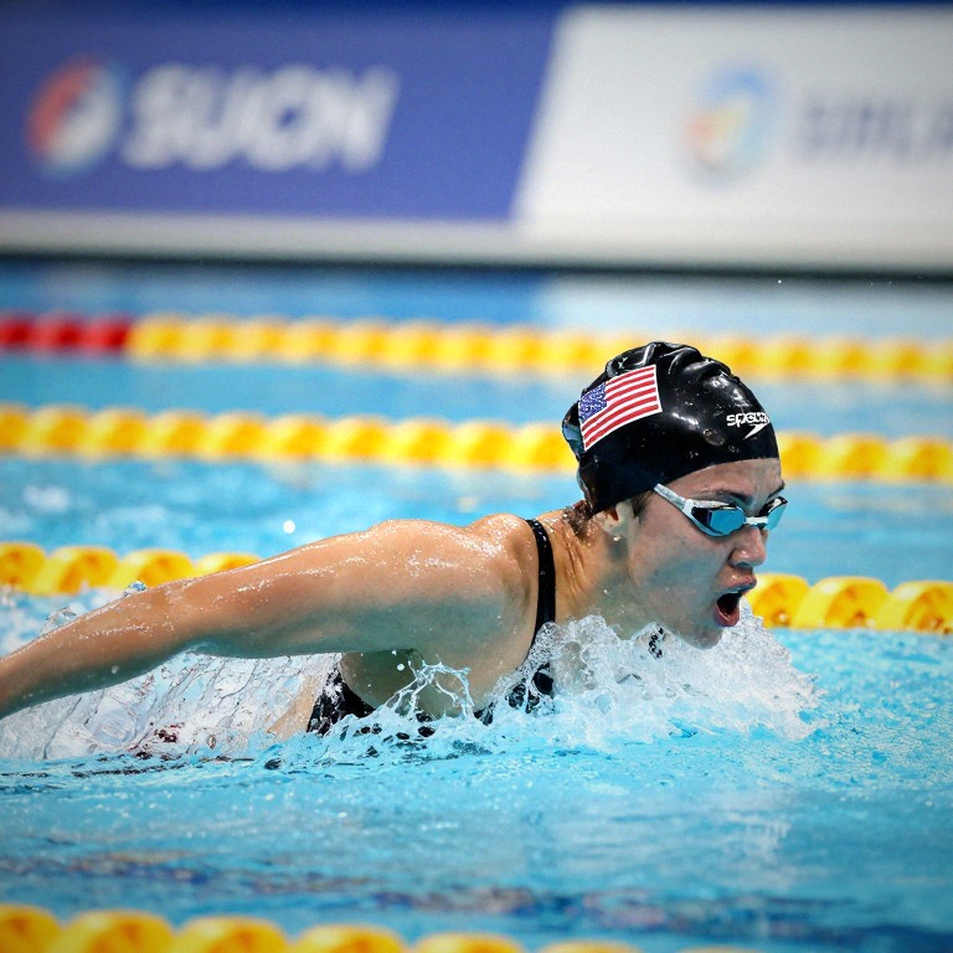
The real signal sits in the interior lines the headline omits. Swimming moves to week two. The pool will be built inside SoFi Stadium, with work beginning only after the Opening Ceremony, scheduled for 14 July 2028.
Three sentences, three questions: one about the swimmer's body, one about the sport's visibility, one about its infrastructure.
The arithmetic of the swap
The first question is easy to state and hard to answer. Moving swimming to week two finally lets swimmers attend the Opening Ceremony. Previously the heats began the very next morning, so walking in the parade meant compromising sleep, taper and focus. Many swimmers have watched their flag on television from a hotel lobby.
That is not small. How many Olympic experiences does a career hold? Two, three. The ceremony is one of the few memories that lasts, and it has been taken from them. Now it returns — a deliberate design choice, not an accident.
But the gain has a cost nobody seems to be counting.
Consider Bangladesh. No Bangladeshi swimmer has ever qualified on merit. Those who go, go on universality places — the minimum representation slot. Ariful Islam and Junayna Ahmed went to Tokyo that way; one or two went to Paris. When a television graphic called them Olympic qualifiers, I pulled the entry lists and wrote that this is an invitation, not a qualification. A federation official complained. I was thrilled.
For that invited swimmer the swap cuts both ways. He gets to walk in the ceremony, a rare honour for an athlete from a country like ours. His event also slides into week two. And where is Bangladeshi media attention in week two? The ceremony, the first medal, the first star — all of it is spent in week one. By week two our sports desks are close to empty.
So the swimmer gains a ceremony and loses the coverage at home. Which matters more is his call. I will only note that attending the parade is not the same as being seen at home.
The taper calendar shifts
One consequence goes almost unnoticed: periodisation. A swimmer's year is built around a date — which day, which event, which heat. Coaches and sports-science teams shape load, taper and recovery around that calendar. Move swimming a week and the whole calculation moves. The effect is largest for athletes who carry multiple heavy events, especially relay swimmers. The report offers no athlete-level data, so this cannot be measured, but the notebooks are already open.
Where the stadium becomes the pool
The second question is technical. SoFi is an NFL stadium: turf, floodlights, a giant scoreboard. A 50-metre long-course pool will sit inside it, built after the ceremony. That is no small job — millions of litres, filtration, heating, chemical balance, lane ropes, blocks, touchpads, timing systems, all competition-ready within days.
Overlay pools are not new. Major events without a permanent aquatics centre increasingly fold a pool into an existing venue. SoFi will be the largest example, a football stadium turned into a world-class aquatic venue for two weeks.
One subtle question is rarely raised. Depth, water temperature, lane-rope tension and current all shape times. Swimming has a phrase for it — the fast pool, where design alone produces speed. A stadium-installed pool that is not purpose-built invites ratification debate. World Aquatics approval and certification will be needed. The report does not mention it, but procedurally it is inevitable. A world record should not have to defend its own legitimacy the next morning. A record's value rests on process, not only on water.
Temporary pool, permanent question
The third question is the largest and least discussed. A city that can drop a pool into a stadium has already finished its permanent infrastructure. Los Angeles has year-round pools, clubs and leagues. The Olympic pool is surplus, a luxury.
Bangladesh is the inverse. Our biggest arena is the outdoor Mirpur pool — open, closed in the rains, dim at dusk. An international-standard indoor pool has been promised repeatedly and remains unbuilt. Our swimmers depend on that old rectangle all year, and the schedule frays in winter and monsoon.
Here a dangerous confusion takes root. Reading about the SoFi pool, someone may conclude that building a pool is easy — it folds and travels. The truth is the opposite. A city installs a temporary pool because its permanent base is solid. Bangladesh's problem is not hosting an Olympics. It is teaching one child not to drown.
Roughly forty children die by drowning in Bangladesh every day. Every day. The pool in SoFi gets more care in two weeks than a village pond needs to teach a child to float. SwimSafe, CIPRB and UNICEF work at those ponds, and their work does not compare with an Olympic pool, nor should it.
The pipeline has three tiers
Our own pipeline matters here, and it runs in three tiers. First, the Navy and services teams, whose dominance at the national championship is near-automatic — the result of a recruitment-and-training system, not any individual's fault. Second, BKSP, a talent-identification and residential pathway that has pushed a few swimmers to the national team. Third, civilian club swimming, largely hollow: no permanent pool, no year-round coach, no patronage. A swimmer's journey often stops at a single point — a place to train. Talent does not survive without water.
The two-week gap and Dhaka's silence
I am sceptical of one part of the swap. Swimming has long been the headline sport of week one: the stars, the medals, the drama of the timing board. Moving it to week two hands week one to athletics and leaves swimming beside it, in its shadow. Broadcast arithmetic is simple — advertising, audience, value, by week. If swimming is no longer the opening engine, its commercial weight may shift. The report says nothing of this, but it is the real game behind the screen.
The scoreboard tells you who won; the silence tells you why. This silence has to be heard in the schedulers' room, not in the swimmers' parade.
Wrong headline, buried signal
The mismatch is the report's real problem. The headline is about a torch; the swimming news is buried inside, behind the torchlight. That mismatch is itself a lesson. Swimming rarely arrives as swimming news; it arrives at the edge of something else. I spent three weeks of the 2026 World Cup in the National Library, photocopying old clippings, and I learned then that swimming never reaches the headline on its own — someone has to go find it.
A warning to myself: this is a logistics report, not a performance report. No swimmer is named, no time is recorded, no medal is at stake. Anyone who reads it as the birth of a new star has misread it. Nothing is new in the body; something is new in the system. And system news is rarely loud, yet it shapes the long term most.
The river, the Channel and a ledger
History is not a highlight reel; it is a locker room after everyone leaves. Between 2026 and 2026 Brojen Das crossed the English Channel six times, training in the Buriganga. Then Mosharraf Hossain crossed in 2026, and for thirty-seven years no Bangladeshi entered that water — until the 2026 relay team of Sagor and Himel. Thirty-seven years is a generation, and the gap is not nostalgia; it is a ledger. The answer is not on a medal table but in water infrastructure, training and access.
When the pools closed, the rivers became the stadium. During the pandemic Mirpur shut, the national championship was cancelled, and swimmers called me from ponds and canals. On the Karnaphuli I filmed drowning-prevention sessions while Dhaka swimmers asked by phone for their pool back. Both facts are true at once: in a country where children drown daily, the absence of swim lessons and the absence of a competition pool are two faces of one problem. In 2026 I filmed the 10 km race on the Dhaleshwari, where Navy swimmers took the top five and one civilian from a river district finished anyway. No national outlet sent anyone.
Forward
Three things to watch. First, how fast the SoFi pool goes up: if the window between ceremony and week two slips, swimming dates move — a logistics risk, not a sporting one. Second, whether World Aquatics imposes special venue certification; if so, every record set there faces separate verification. Third, swimming's broadcast slot: if it cannot reach prime time even in week two, the swap is a gift to swimmers and a demotion for the sport.
One question remains for Bangladesh. After the 2028 cycle, what will we hold? A universality place and a walk in the parade, or finally an indoor pool, a working drowning programme and a river race? The first two last two weeks; the rest last decades.
The torch starts in Atlanta. I will be watching how much of its light reaches the Karnaphuli.